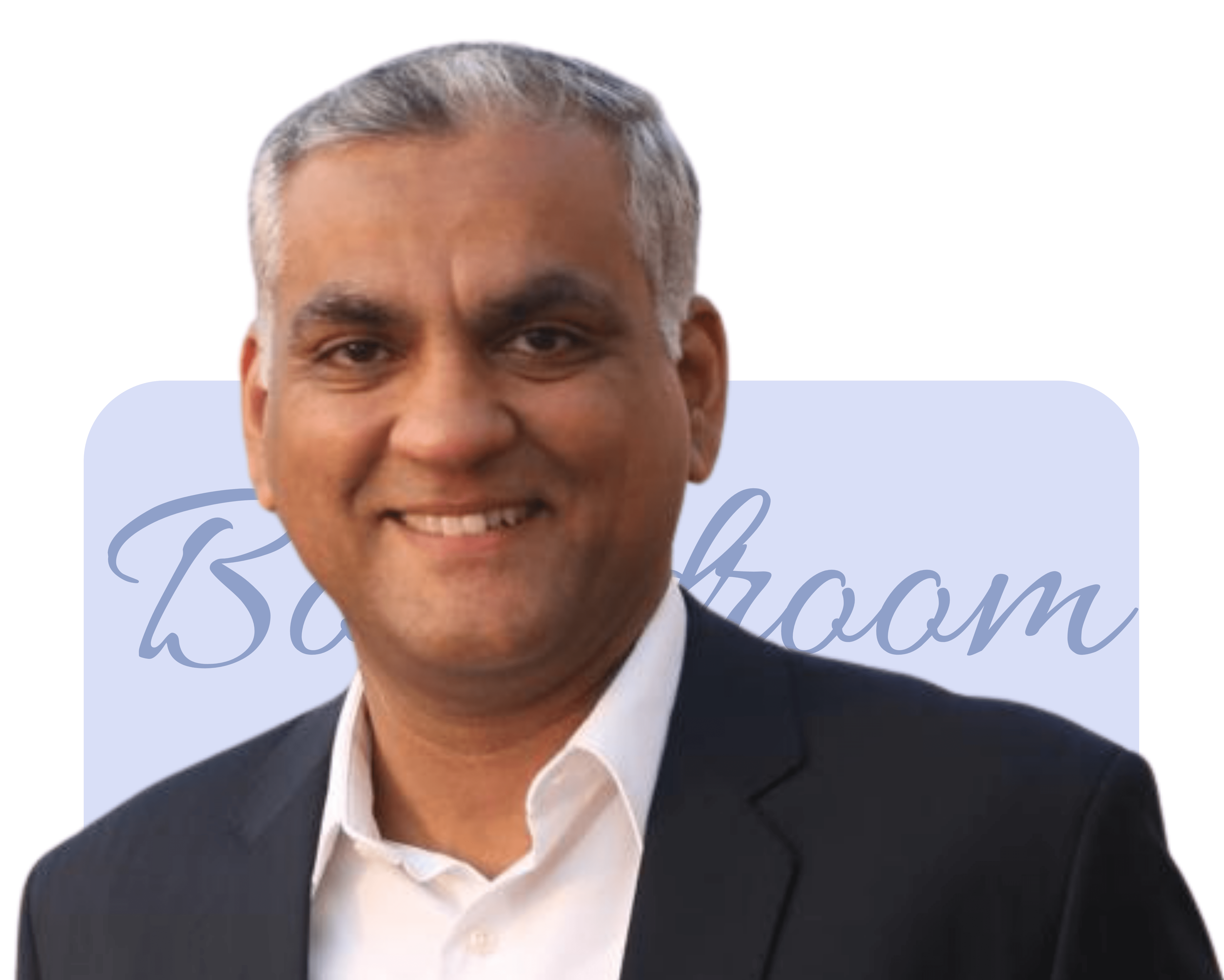
Discover how *Kamran Azim of Taleem Finance Company Limited* is transforming education finance and financial inclusion in Pakistan. In this exclusive Boardroom Publication interview, he shares insights on affordable education, financing low-cost private schools, empowering educators, improving learning outcomes, and building a sustainable education ecosystem through responsible lending, innovation, and financial accessibility.
Boardroom: You have more than 25 years of experience spanning KPMG Pakistan, Total PARCO Pakistan,
Kashf Foundation, and now Taleem Finance Company Limited. What key experiences shaped your
leadership philosophy and ultimately led you toward the education finance sector?
Kamran Azim: There are quite a few things that have shaped my leadership journey.
To begin with, as a chartered accountant, I was exposed to some great minds right from the
outset. I had the privilege of becoming a manager early in my time at KPMG. That brought me into close contact with some of the best financial minds in the sector at that time, people like Mr. Danish Kamal and
Mr. Farid Ahmed. They were senior partners at KPMG at that time and had been serving the firm for many decades
when I became a manager, so I had the opportunity to work directly with them.
My first real experience of moving from a chartered accountant mindset to understanding how
businesses actually operate came through them. That became the first stage of my leadership journey.
Then, of course, I was able to use that experience to move into the industry. I became one of the
founding team members of an oil marketing company. It was the first time a French OMC had entered Pakistan. As a Financial Controller, I was closely engaged with the expatriates there, including the CEO, who was from Belgium.
That experience taught me that when you move from a professional services firm into the industry, you suddenly gain enormous exposure to the real business world.
When you are part of the leadership team of a company operating in one of the fastest-moving industries, such as
oil marketing, there is a huge agenda. These companies have massive revenues, targets, and
expectations. The key thing I learned from that experience was how to stay composed when you
have such demanding goals and are expected to deliver high profitability and strong numbers.
That was a major learning experience for me. Because my role carried substantial responsibilities,
I learned the importance of planning everything meticulously so that I could achieve those targets.
During my four years at Total, we were able to exceed all the targets set by Total France for Total
PARCO. We became Total France’s flagship operation at the time, which was a matter of great
pride for me as well as everyone in the team.
One of my biggest inspirations was my own father. He was an educationist, a double PhD, and the Director of NIPA, the National Institute of Public Administration. He would have casual conversations with me and ask, “What are you doing at work? What are you achieving? What are you working on?”
When I started telling him about my work, he said, “Whatever you are doing is good, but why
don't you also start teaching? You are a chartered accountant. I am sure that if you start teaching, it will also keep your concepts fresh, and you will be able to engage with a much wider audience.”
I agreed with him.
The role of a financial controller can be quite restricted in terms of human engagement. You are
dealing with a few bankers and senior executives, but you are not necessarily engaging with the
wider public.
This aspect pushed me to make a major shift in my career journey and I moved into the development
sector. What I realized was that, as I moved beyond the chartered accountancy mindset, I also
needed to explore and understand myself. Kashf had an opening for an Operations Head, and that was very different from the work I had been doing.
My entire experience had been in finance, balance sheets, financial advisory, and related areas.
This was a completely different challenge, and I am very grateful to the Managing Director of
Kashf Foundation, Ms. Roshaneh Zafar who told me in my interview, “Kamran, you seem very excited about this role and that is the only reason I want to give you this opportunity. Otherwise, you do not fit the profile at all. There is not a single thing in your profile that matches what we are looking for in a Chief Operating Officer for a Micro Finance Institution, except your excitement.”
I spent almost 15 years at that institution, and I cannot imagine my life today without those fulfilling years of
a highly gratifying experience.
If I were to sum up my entire career till now in one line, the biggest leadership lesson
I’ve learnt would be this: you may be successful in whatever academic or professional field
to which you belong, but until you are able to contribute to people’s lives and lead a life of service—
where you can help someone and bring a smile to the faces of people who are underprivileged,
marginalized, and who have far fewer resources than you—you can never truly feel a sense of purpose
in your life.
Our problem is that we always keep looking upwards. But when you look around, you realize that there is a huge population in this country not hundreds or thousands, but millions and millions of young children, women, men, and older people who do not get even one proper meal a day. Their entire life's objective is simply to be able to feed themselves or their families today without the ability to think beyond that. If you are able to contribute to their lives, it gives you a completely different sense of purpose.
In 2019 I got the opportunity to start a dedicated education finance company. With a great investor, Gray Matters Capital, supporting the idea, we decided to start something that no one had done before and make history in the country. That is how Taleem Finance was created and I had the privilege to lead this initiative. This gave me the opportunity to engage with children. We were able to become part of the lives of marginalized students who attended private schools but often sat on the floor to receive their education. We became the only institution financing such schools at that level, because no one else was doing it.
If I had to sum up my leadership philosophy, it is this: plan meticulously, stay close to the people you serve, and measure success by the lives you change, not only by the numbers
Boardroom: You have played a leading role in establishing Pakistan’s first dedicated education finance
company. What gap in Pakistan’s education ecosystem convinced you that a specialized
education-finance institution was necessary?
Kamran Azim: According to Pakistan’s 2023 Census, there are approximately 71.27 million children aged 5–16 in
Pakistan. Of these, around 45.90 million are currently attending school, while approximately
25.37 million are out of school. That means about 35.6 percent of children in this age group are
currently out of school. (Pakistan Bureau of Statistics, Census 2023.)
Access to school does not necessarily translate into adequate learning. UNICEF has reported that
around three-quarters of 10-year-olds in Pakistan are unable to read and comprehend age-
appropriate text, highlighting the country’s learning crisis. At the same time, a relatively small
segment of the population has access to elite education, creating a significant divide in
educational opportunity. (UNICEF, 2023.)
In my view, the system has not served the educational needs of a large part of the population,
and this has contributed to persistent gaps in access and quality.
As we speak, there is a serious crisis taking place in our country. Every day, we are seeing children
who are even receiving an education that gives them almost no future. The gap exists because the environments in which these children study are severely
compromised. They may grow up frustrated, without opportunities, and potentially become involved in crime or other harmful activities simply to earn a living. If they cannot find opportunities within Pakistan, some may even risk their lives trying to leave the country and find work abroad.
When we started Taleem Finance and began speaking to investors and commercial banks, we had already conducted research across Lahore and other parts of Pakistan.
As you move towards South Punjab or Khyber Pakhtunkhwa, the situation becomes much worse.
But even in cities such as Lahore, Multan, Faisalabad, Gujranwala, Rawalpindi and Peshawar, there
are private schools where children are sitting on bricks.
There are private schools where a room may literally be ten feet by ten feet, with 40 students
cramped inside. There is no proper lighting, no fan, and the children are sweating while the teacher
is trying to teach them. The environment is so poor that even though it is technically a private
school, it does not provide an environment in which meaningful learning outcomes can take place.
So, what is the reason for this?
Until TFCL was established, no institution was willing to finance these schools so that they can improve and grow. These are viable businesses. They have revenue models, but they need someone to invest
equity or provide debt financing. Every large business in the country requires leverage. Whether
you look at Nishat, Packages or any other major company, they require debt and equity financing
to grow.
The same applies to these smaller schools. The people who started them are often highly
motivated and deeply committed to their work. They have spent years trying to build these small
institutions and have put in their best efforts. Their biggest constraint is that nobody is willing to
finance them. We call them eduprenuers.
The average microfinance loan is around Rs 60,000. But when you are running a school, Rs 60,000 is almost
nothing. If you want to replace the furniture in a basic school, it may require Rs 1 million. If you
want to add a new classroom, it could require Rs 3 to 5 million. If you want to build a
playground or proper washrooms, you need even more financing.
Let me give you an example. After Grade 5, what do you think is one of the biggest reasons for
girls dropping out of school in Pakistan? One major reason is the lack of separate washrooms for
girls. As girls reach puberty, they require appropriate and separate facilities. When these facilities
are not available, parents often pull their daughters out of school.
Who is going to help these schools build those washrooms? If they had access to finance,
they could make these improvements. But nobody was willing to finance them. That is where we
came in.
As the first dedicated education finance company not a microfinance company, but a full-
fledged NBFC we sometimes feel proud of what we have achieved, but at the same time, we
also feel concerned that it took so long for such an institution to emerge. When we tell
people is that Pakistan has a very large number of private schools serving children
who need educational support, it is difficult to explain why, until recently, no institution had a
dedicated programme or focus on financing these schools.
Although this is an interview, I genuinely want people to understand that the work we are doing
is not simply a business. Of course, we want to be sustainable because we are not a “not-for-profit”
organization or an NGO. We have investors who expect a return at the end of the day, and we are
not investing in charities.
As stated earlier, these low cost schools are are viable businesses. They have strong business models. Unfortunately, because they do not receive financing at the right time, they are unable to become as profitable or as
capable as they could be. As demand for our financing grew, our own resources became the constraint.
Schools were coming to us with real and urgent needs. There was a school owner, a woman from
Baghbanpura, who came to us in tears. She thanked us and told us her story.
She had inherited a school from her uncle, who had passed away without children and had left
the school to her in his will. She had been running the school for eight to ten years.
When she took over the school, she realized that her uncle, being a man, had not considered that
the iron furniture he had installed had sharp corners. The girls attending the school were unable
to continue because their clothes would frequently get torn on the furniture.
For ten years, she had begged her family for help and approached commercial banks. At that time,
she needed around Rs 800,000 to replace all the furniture with safer fiberglass.
Eventually, her financing requirement increased to around Rs 1.7–1.8 million. She was
struggling to retain students because of the poor furniture. Then our team visited her school. She
initially thought it was a joke because she had become used to institutions making offers that
never met her need. But our team evaluated her school and told her that her business model was
strong enough to qualify for financing of up to Rs 3 million. This meant she could not only replace
the furniture but also make other improvements. She had a suitable roof, so we were able to
finance the installation of a solar system as well. She later came back to tell us how deeply
grateful she was. She had replaced all the furniture, and her existing students and teachers were
delighted.
With the new solar system, her electricity bill, which had previously been around
Rs 50,000–60,000 a month, was significantly reduced. She was able to repay the
financing through her school's income. She believed that she could repay the Rs 3 million within
24 months, and she did. We then refinanced her, allowing her to continue improving the school.
This is just one story among thousands. This is the impact we are creating. Who are we helping?
We are helping children who otherwise might not have had access to a better educational
environment. In this particular case, the school was run by a woman who had greater awareness
and compassion for the needs of girls. She already had a girls' washroom and was very conscious
of creating a suitable environment for them. But she simply did not have the money to replace
the furniture. By changing the furniture alone, she was able to retain her existing female students and attract new
ones. These are the kinds of stories that are happening every day at Taleem Finance.
And there is another important dimension to this work. These interventions are not merely
changing the lives of people in their 40s, 50s, or 60s, as we often see in traditional microfinance
for example, helping someone buy a sewing machine so they can earn a living. These interventions
are shaping the next generation. The two biggest sectors of business in Pakistan today are
arguably healthcare and education. If you own a school or university, particularly one serving
more affluent families, you can generate significant revenue. Similarly, even a pharmacy can
be a profitable business. So how has such a large gap been created? Why are people not investing
enough in these sectors, while some institutions continue to make significant amounts of money?
The answer lies in which segment of the population these institutions serve.
The large groups that are making substantial amounts of money are the major education
Providers; the large, well-known school and university networks.
These institutions serve a very small percentage of the overall population. There is a common
misconception when people look around Lahore. They say, “You cannot find a table in any
restaurant. How can there be poverty in this country?”
But we are talking about a country of around 250 million people. If we focus only on a few hundred
thousand or even a few million relatively affluent people, we are looking at a very small segment
of the overall population. Similarly, the large education groups we see today represent only a
fraction of the institutions operating across the country. These larger institutions generate
significant revenues because they primarily serve families from more privileged backgrounds.
I am not criticizing their success. My point is that while these larger education groups generate substantial wealth and serve an important segment of the market, they represent only a small part of Pakistan’s broader education
landscape.
This highlights a significant gap in the education sector. As a result, larger institutions continue to
expand and strengthen their position, while smaller institutions often struggle to grow, improve
their quality, and remain financially sustainable.
Perhaps the biggest obstacle for these smaller institutions is that the stakeholder who should
be helping them the most, the government, has not done enough. , e.g. Pakistan's public spending on education of roughly 1.5-2% of GDP against the international benchmark of 4-6% (UNESCO Education 2030 Framework). Year after year, the education budget continues to be squeezed. Whether we look at Punjab, Sindh, or the national
level, one of the budgets that is repeatedly cut or receives inadequate attention is education. Instead, the focus often shifts towards roads, bridges, buses, new buildings, new colonies, and other infrastructure projects.
But if we genuinely want to change the future of Pakistan, education has to become one of our
highest priorities. Without improving the quality of education and giving smaller schools access
to the financing they need, the gap between the privileged and underprivileged will continue to
grow.
Boardroom: With almost 15 years of experience at Kashf Foundation and extensive work with
marginalized and low-income communities, what lessons from the microfinance sector have been
most valuable in designing financial solutions for the education ecosystem?
Kamran Azim: One of the biggest lessons we learned from microfinance is that it is a business of engaging with
people and understanding their needs. You cannot solve the problems of a micro-entrepreneur
while sitting in a beautiful office and assuming you know what they need. You have to become
part of their lives, understand their environment, feel their challenges, and then offer solutions
that are actually relevant to them.
At Kashf, we always believed in staying close to the client, listening to their real needs, and
providing solutions that could create meaningful impact. Impact is not created in boardrooms; it
is created in the homes and workplaces of the people you are trying to help. I remember seeing
women working on embroidery and embellishment in extremely difficult conditions. In such
situations, the first step is not simply to provide money. It is to understand what the most
important need is and help the client prioritize it.
Many people with limited financial experience may ask for financing for one thing when another
need is actually more important. This lesson from microfinance became extremely relevant when
we started working in education finance. Low-cost private schools had traditionally received very
small amounts of financing, sometimes no more than Rs 50,000. Suddenly giving them Rs 3–5
million without proper guidance could be overwhelming and could even lead to the money being used inefficiently.
That is why, at Taleem Finance, we created a specialized team of School Development Executives
(SDEs) rather than simply using conventional field officers. Their role is not only to assess a school
financially but also to understand its operations and help the school owner decide where the
financing can create the greatest impact. A significant proportion of larger financing cases are
personally reviewed by our credit committees, and technology also allows us to conduct
virtual school visits, see classrooms, speak directly with school owners, and understand their
requirements.
For example, if a school approaches us for Rs 5 million to purchase land, our first question is
whether that is really the best use of the money at that stage. Perhaps the school would benefit
more immediately from better furniture, a science laboratory, improved washrooms, solar
energy, or other infrastructure that can directly improve the learning environment and strengthen
the school's operations. Our responsibility is therefore not simply to provide financing, but to help
clients evaluate, prioritize, and deploy those funds in a way that makes the institution stronger
and more sustainable.
Another important area is teacher development. Around 80 percent of the teachers working in
these institutions are women, many of them young. At Taleem Finance, we established the Taleem
Learning Center, where teachers can receive training and develop their professional skills. Once
the physical infrastructure of a school has improved, the next major step towards better learning
outcomes is improving the quality of teaching.
Many low-cost private schools operate with limited access to trained teachers, modern teaching
methods, appropriate curricula, and standardized systems. Our objective is to bring in some of
the best teacher trainers and pedagogical approaches and then adapt them to the local context.
Recently, we conducted a full-day training session with 19 teachers at the Learning Center. Some
of them had been teaching for five to eight years, yet they were encountering certain teaching
concepts for the first time. That shows how significant the need for continuous teacher
development really is.
Microfinance also taught us the importance of financial literacy. Providing access to finance is only
the first step; people must also understand how to manage their money effectively. We taught
women how to calculate the cost of their products, manage their expenses, assess their income,
and ultimately determine their profits. In many cases, women were working extremely hard but
were unknowingly losing money because they were not pricing their products correctly. In Sindh,
for example, women producing traditional crafts such as ralli quilts were sometimes selling their work
at prices that did not adequately cover their costs. Financial literacy helped them understand the
true value of their work, make more informed pricing decisions, and turn their skills into more
sustainable sources of income.
We have carried the same philosophy into Taleem Finance. Alongside providing financing, we also
guide school owners on effective school management, financial record-keeping, fee structures,
profit and loss statements, and operational expenses. Our School Development Executives work
closely with school owners to identify financial leakages and understand where their money is
being spent. The objective is to make financing more than just a loan—it should serve as a
practical tool for sustainable growth, stronger school management, and long-term institutional
development.
Technology has also become an important part of this process. Our systems are paperless and
tablet-based, allowing information and calculations to be processed efficiently and displayed on
screen. The combination of technology with deep engagement with clients enables us to
understand schools more effectively while also helping us build and maintain a strong portfolio.
Alhamdulillah, over the last seven years, Taleem Finance has disbursed around Rs 2.5 billion.
In this type of financing, international portfolio-at-risk levels on a 30 day level can be around 15 to 18 percent,
whereas our portfolio-at-risk has remained below 3 percent. That has been a significant
achievement for us and reflects the importance of understanding our clients, supporting them
properly, and maintaining discipline in the financing process.
Building a strong portfolio has taken time. Today, Taleem Finance has reached a point where the business is becoming more sustainable. We are now looking at how we can communicate our work and its impact to a much wider audience. Insha’Allah, in 2027, we are planning a major media campaign. I believe the timing is right, and this
conversation is itself an important step towards telling the story of what we are trying to achieve
through Taleem Finance.
Boardroom: How can responsible financial inclusion help low- and middle-income families access better
educational opportunities, while also enabling schools to improve their quality and sustainability?
Kamran Azim: Financial access allows schools to improve their infrastructure, create safer and better learning
environments, and ultimately provide children with a better quality of education. But the impact
goes beyond the school itself. It extends to parents, teachers, and, most importantly, the children
whose future depends on having access to continuous education.
At Taleem Finance, we believe that financing should do more than help schools grow as
sustainable businesses; it should also help ensure that children remain in school and continue
their education. That is why we have created a direct link between school financing and
educational continuity. When a school receives financing while maintaining its commitment to
keeping children enrolled, it strengthens its own sustainability while giving students a better
opportunity to stay in education. In this way, our financial support goes beyond strengthening
institutions, it creates a broader social impact by connecting the financial sustainability of
schools with the educational future of the children they serve.
The same approach extends to teachers. Improving a school’s infrastructure is only one part of
improving education. Teachers need the right training, skills, and opportunities to grow
professionally. Through Taleem Finance, we aim to give teachers access to training, certifications,
and, where appropriate, financial support that can help them strengthen their capabilities. When
teachers become more skilled and confident, the quality of education improves, and that
improvement ultimately reaches the classroom.
This is how we see the entire education ecosystem: the school, the teacher, the parent, and the
Child, are all connected. If we strengthen only one part, the impact remains limited. But when we
support the institution, develop the teachers, encourage parents to keep their children in school,
and help ensure continuity of education, we can create a much stronger and more sustainable
education system. Our goal is not simply to finance schools; it is to invest in an ecosystem where
better institutions, better teachers, and continued education can come together to create better
opportunities for children.
Boardroom: Low-cost private schools serve a significant segment of Pakistan’s population. What financial,
operational, and capacity-building interventions are needed to transform these schools into
stronger and more sustainable institutions?
Kamran Azim: Schools need appropriate financing to improve essential areas such as furniture, classrooms,
laboratories, washrooms, and other infrastructure. However, providing financing alone is not
enough. School owners also need guidance on how to prioritize their needs and use financial
resources effectively. Our objective at Taleem Finance is to ensure that once an institution
becomes eligible for higher financing and demonstrates the capacity to absorb it, we help the
school owner make informed decisions about how those funds should be used.
The focus is on ensuring that financing goes towards the areas that can create the greatest impact.
Instead of using funds simply because they are available, school owners are encouraged to
identify the improvements that will strengthen their institution, improve its operations, and
contribute to a better learning environment. This approach allows financing to become a tool for
long-term growth rather than a short-term solution.
Capacity building is another important part of this process. Through our School Development
Executives, we work closely with school owners to strengthen their management practices and
help them understand the importance of monitoring their results. They are encouraged to track
key areas of their business, understand their income and expenses, and establish clear Key
Performance Indicators (KPIs).
For a school to become stronger and more sustainable, the owner must be able to continuously
evaluate what is working and where improvements are needed. By combining appropriate
financing with better management, effective monitoring, and clear priorities, we can help schools
become financially stronger while creating an environment where better education can take
place.
Boardroom: Taleem Finance provides both financial and non-financial services to the education sector. Why
is it important to go beyond lending, and what kind of non-financial support can create the
greatest long-term impact?
Kamran Azim: Improving teacher quality is essential because learning outcomes depend heavily on teachers.
Many low-cost schools need better-trained teachers and more professional development. We
therefore support contextually relevant teacher training so teachers can build their skills and
careers and improve the quality of education.
When we invest in these schools, the learning environment improves immediately through better furniture and classrooms. However, the quality of education is directly linked to the quality of the teachers. That is where we at Taleem Finance see a major opportunity: because we provide financing, we can encourage schools to undertake teacher-training initiatives that are relevant to their circumstances.
Training should reflect the realities of local schools. Advanced programmes that cannot be applied in their classrooms are unlikely to be useful. Teachers need practical, contextually relevant training that they can put into practice.
Boardroom: Given your expertise in corporate governance and internal controls, what governance practices help balance responsible lending, risk management, and sustainable growth in education finance?
Kamran Azim: Responsible lending requires financial institutions to understand the client, assess the institution's capacity to absorb financing, and ensure that funds are used for clearly identified needs. At Taleem Finance, we combine financial assessment with a close understanding of the school and its operations. Larger financing cases are reviewed through our credit committees, and our School Development Executives help school owners prioritize how funds should be used. We also encourage schools to monitor their income and expenses, track key performance indicators, and identify financial leakages. This combination of disciplined financing, monitoring, and better management helps balance responsible lending with risk management and sustainable growth.
Furthermore, the internal governance standards at TFCL are also maintained at the highest level through a strong Board of Directors who closely monitors the entire risk universe linked with education financing in Pakistan. We also ensure full compliance with all statutory and reporting requirements of SECP and supplement this with an independent internal audit function that reports to the Audit committee of the Board in addition to the Board’s Risk management committee which reviews all matters related to credit practices and key policies.
Boardroom: How can digital financial services, data analytics, AI, and technology-enabled lending transform
access to finance for schools and other education-sector businesses across Pakistan?
Kamran Azim: Technology has become an increasingly important part of modern financial services, particularly
for development-focused institutions such as Taleem Finance. A strong digital model can help
institutions use data more effectively, strengthen and accelerate decision-making, and make
financial services more convenient and accessible for customers. It also enables institutions to
remain closely informed about their clients and monitor their activities more efficiently.
It allows institutions to ensure that important information is recorded, monitored, and reported
systematically. When data is accurate and readily available, decisions can be made faster and with
greater confidence. Digital platforms can also improve transparency, streamline processes, and
help institutions identify potential risks or changes in a client’s circumstances at an earlier stage.
However, technology should complement rather than replace human interaction. In our line of
business, physical engagement and personal relationships remain extremely important.
Understanding a client’s circumstances cannot always be achieved through data alone. Direct
interaction allows institutions to understand the realities behind the numbers and build stronger
relationships based on trust and understanding.
For this reason, the future lies in creating a balanced model that combines digital efficiency with
physical engagement. Technology can make processes faster, more accurate, and more convenient,
while personal interaction ensures that clients continue to receive the attention and
understanding they need. For a development-focused financial institution such as Taleem
Finance, bringing these two elements together is essential for sustainable growth and meaningful
impact.
Boardroom: How can financial services across the education value chain strengthen institutions and improve
learning outcomes?
Kamran Azim: The entire education ecosystem needs support, including schools, parents, teachers, and
businesses such as stationery shops, school transport, and canteens. Providing financial services
across this value chain can improve access, strengthen institutions, support teachers, and
ultimately improve learning outcomes. So, for us, education quality and learning outcomes can
only improve if the entire ecosystem is addressed. This, of course, requires access to these
financial services right to the end of the value chain. This is something Taleem Finance is very clear
about.
From day one, we knew that we were going to be an ecosystem provider. The low cost education institution,
of course, sits at the top of the agenda. But everything linked to it in the ecosystem needs to
have access to finance as well.
Boardroom: What priorities should the education ecosystem focus on to make schooling more accessible
and affordable, keep children enrolled, and improve educational quality?
Kamran Azim: The first priority is to get every child into school by making education more accessible and affordable.
The second is to improve quality through strong investment in teachers and their professional
development. Schools also need access to finance so they can become sustainable and invest in
better facilities and teaching.
We at Taleem Finance feel that it is very important for every parent to realize that the future of
their child is linked to education. Enrolling them in school is the first step. But as long as
getting a child into the education system remains so
cumbersome and difficult, the number of children out
of school will continue to grow.
Boardroom: If you could bring together the Government, financial institutions, education providers,
technology companies, and the private sector around one national agenda to transform Pakistan’s
education system, what would that agenda look like—and what would you want to achieve within
the next five years?
Kamran Azim: The agenda should be simple and focused: every school-age child should have the opportunity to
attend school. Achieving this requires a collective effort to finance children’s education while also
strengthening the schools that provide it. Access and quality must go hand in hand. It is not
enough to bring children into classrooms; we must also ensure that those classrooms provide an
environment where children can learn, grow, and build a better future.
Government programmes that provide financial support for students should be expanded
significantly so that financial constraints do not prevent children from attending school. At the
same time, schools should be encouraged and supported to improve their infrastructure, teaching
standards, management systems, and overall capacity. Stronger schools will be better equipped
to absorb more students and provide them with a meaningful educational experience.
Once we succeed in bringing children into school, the next priority must be improving the quality
of education they receive. This means investing in teachers, training, learning resources,
curriculum development, and better school management. The ultimate goal should not simply be
to increase enrolment numbers, but to ensure that every child who enters a classroom receives
an education that genuinely prepares them for further studies, employment, and a productive
life.