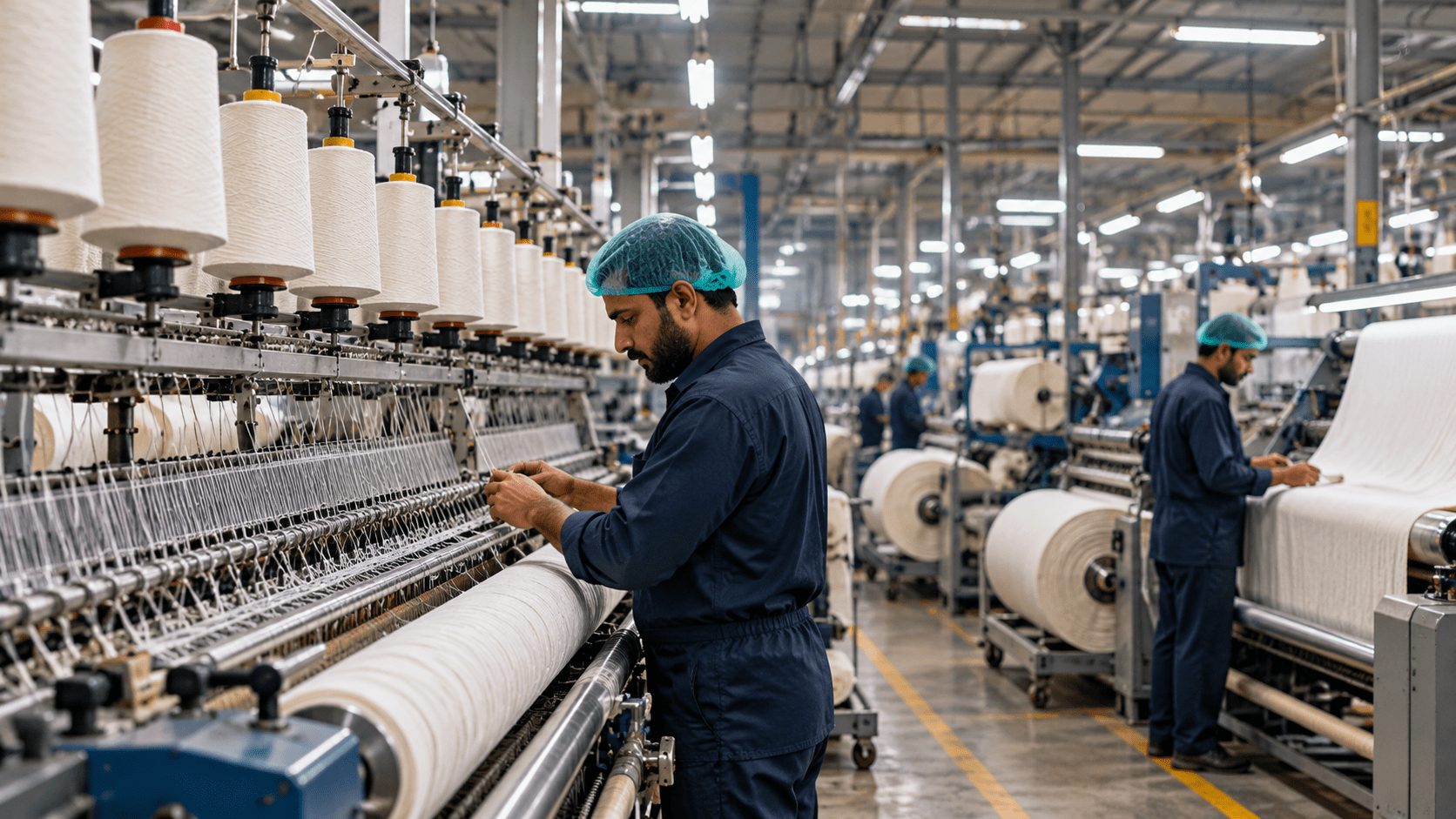
Pakistan’s textile exports remain around $18 billion, but domestic cotton production has fallen sharply. Can the industry protect its export competitiveness?
By Boardroom Research Desk
Pakistan’s textile industry remains the country’s largest export engine.
Textile and apparel exports reached approximately $18 billion in FY2025-26, according to Pakistan Textile Council data reported in September.
But the sector enters FY2026-27 with a structural vulnerability that deserves much greater attention.
Domestic cotton production has fallen to approximately 5.5 million bales, nearly 70% below the 14.8 million-bale peak recorded in 2011-12.
The contradiction is striking.
Pakistan’s textile exports remain strong.
The domestic raw-material base is weakening.
The $18 Billion Export Industry
Textile and apparel exports reached approximately $18.004 billion in FY2025-26, compared with $17.95 billion a year earlier.
That represents growth of only around 0.3%.
But overall Pakistani exports declined by approximately 5.9% to $30.14 billion.
Textiles therefore remained disproportionately important to Pakistan’s export economy.
Value-added products continued to perform better.
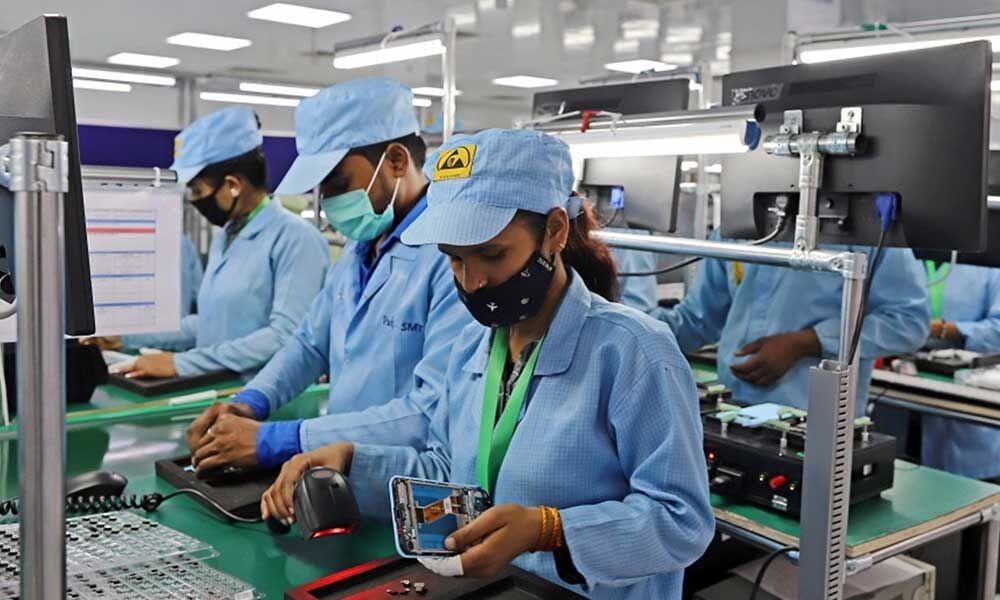
Exports of apparel and home-textile products increased, with value-added categories accounting for more than 80% of textile exports.
The Cotton Problem
Domestic cotton production is the bigger concern.
Output has fallen to around 5.5 million bales.
The reasons include heat stress and water shortages affecting major cotton-producing areas.
This creates a strategic problem.
Textile manufacturers need raw material.
If domestic production falls, imports have to fill the gap.
That exposes manufacturers to:
• International cotton prices
• Freight costs
• Currency fluctuations
• Supply disruptions
• Global commodity volatility
The Export Industry Is Becoming More Value Added
There is nevertheless an important positive trend.
Pakistan is gradually moving toward higher-value textile exports.
Ready-made garments, home textiles and other value-added categories are gaining importance.
This is strategically important because value-added exports generate more economic activity per unit of raw material.
They create more opportunities for:
• Skilled employment
• Design
• Branding
• Manufacturing technology
• Supply-chain development
• International retail relationships
Pakistan should continue moving in this direction.
But Value Addition Needs Supply-Chain Security
A sophisticated garment industry cannot operate indefinitely with an increasingly fragile domestic cotton ecosystem.
The country therefore needs to think about the textile industry as one integrated value chain:
Farmer → Cotton → Ginning → Spinning → Weaving → Processing → Garments → Branding → Export
Weakness at the beginning eventually affects the end.
What Pakistan Needs
A serious cotton revival strategy should include:
• Better seed varieties
• Climate-resilient cotton
• Modern irrigation
• Water efficiency
• Farmer education
• Agricultural technology
• Better research
• Improved farm-to-market systems
• Stronger coordination between agriculture and textile industries
The textile industry cannot solve this problem alone.
It requires agriculture policy and industrial policy to work together.
FY2027 Needs Monitoring
The first two months of FY2026-27 have shown some improvement in textile exports, according to provisional data reported in early October, with exports around $3.38 billion, up approximately 5.55% year on year. Ready-made garments and cotton yarn were among the stronger categories.
This is a useful early signal.
But two months do not establish a full-year trend.
The more important question is whether Pakistan can sustain export growth while addressing its raw-material weakness.
Boardroom View
Pakistan’s textile industry has already built something valuable: an approximately $18 billion export platform.
The next challenge is protecting and upgrading that platform.
The cotton problem should not be treated as an agricultural issue alone.
It is an export competitiveness issue.
If Pakistan wants a larger textile industry, it needs a stronger textile ecosystem.
And that ecosystem begins much earlier than the factory floor.