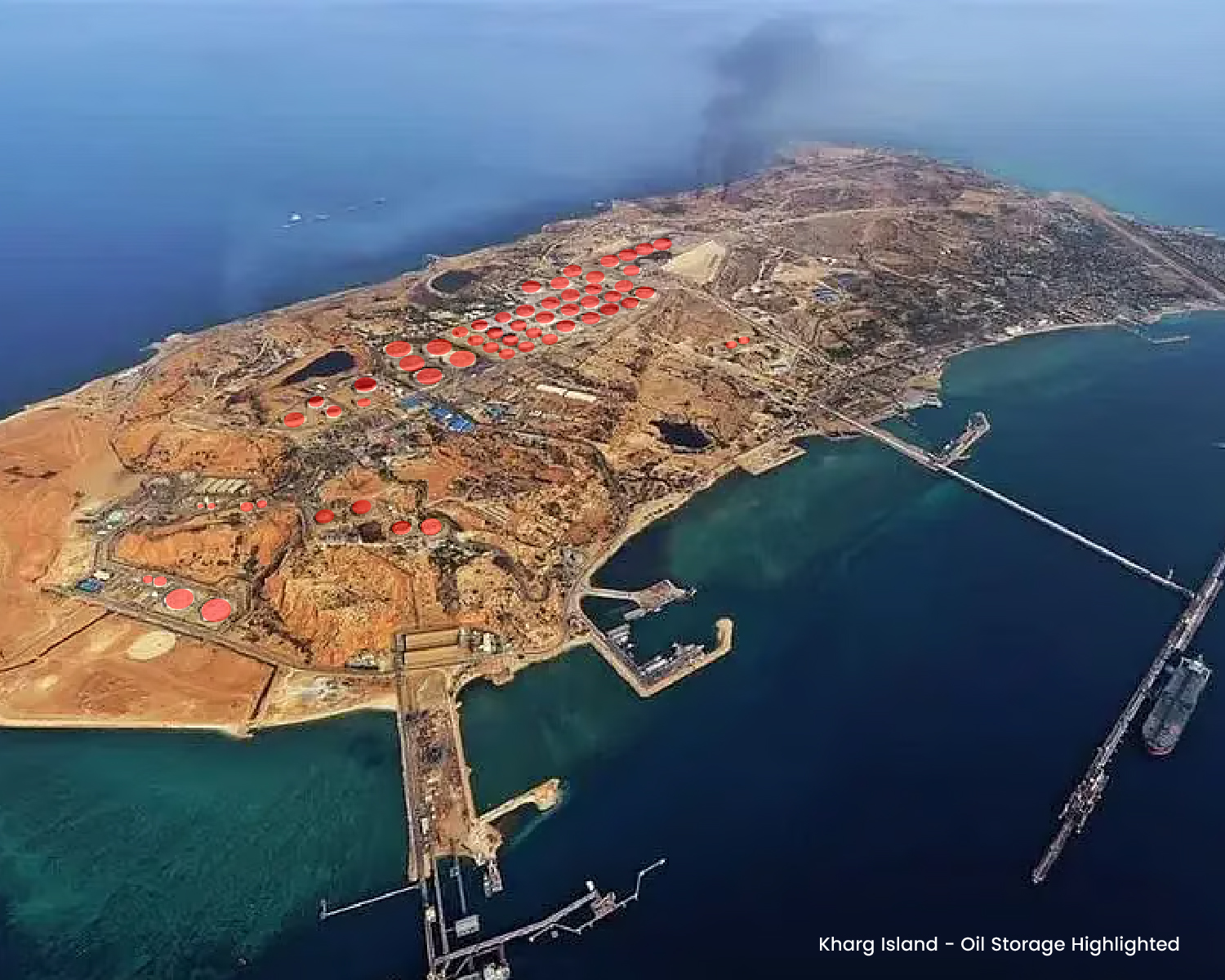
In the Persian Gulf, Kharg Island, is considered a vital pillar of Iran’s economy. It is particularly noteworthy that more than 85 percent of Iran’s crude oil exports are carried out through this island. Therefore, its importance is not limited to being merely a geographic location; rather, it has become a central player in global energy politics.
In recent days, various analyses, concerns, and reports regarding this island have surfaced, further highlighting its strategic significance. In this context, we will attempt to understand the island’s history, importance, and the surrounding political and economic factors, the summary of which is presented below.
Geographical Introduction and Current Importance:
Located in the Persian Gulf, Kharg Island holds extraordinary importance in Iran’s economy, energy infrastructure, and regional politics. It lies approximately 25 to 35 kilometers off the coast of Bushehr province and, despite its relatively small size, represents an extremely sensitive geographic location.
It is regarded as the main gateway for Iran’s oil exports. According to experts, around 85 to 90 percent of Iran’s crude oil exports reach global markets through this island, making it the economic lifeline of the country. The island hosts extensive oil storage tanks, modern loading terminals, and deep-water facilities that enable large tankers to operate efficiently.
Beyond its geographic and economic importance, the island also plays a key role in global politics. Since a large portion of the global economy depends on energy resources from the Persian Gulf, Kharg Island remains a focal point not only for Iran but also for international powers, particularly the United States and Western countries.
In the event of any conflict or military escalation, targeting this island could severely damage Iran’s economy, with immediate consequences for global oil prices and energy supply. For this reason, Iran has provided it with strong military protection, while global powers also factor it prominently into their strategic policies.
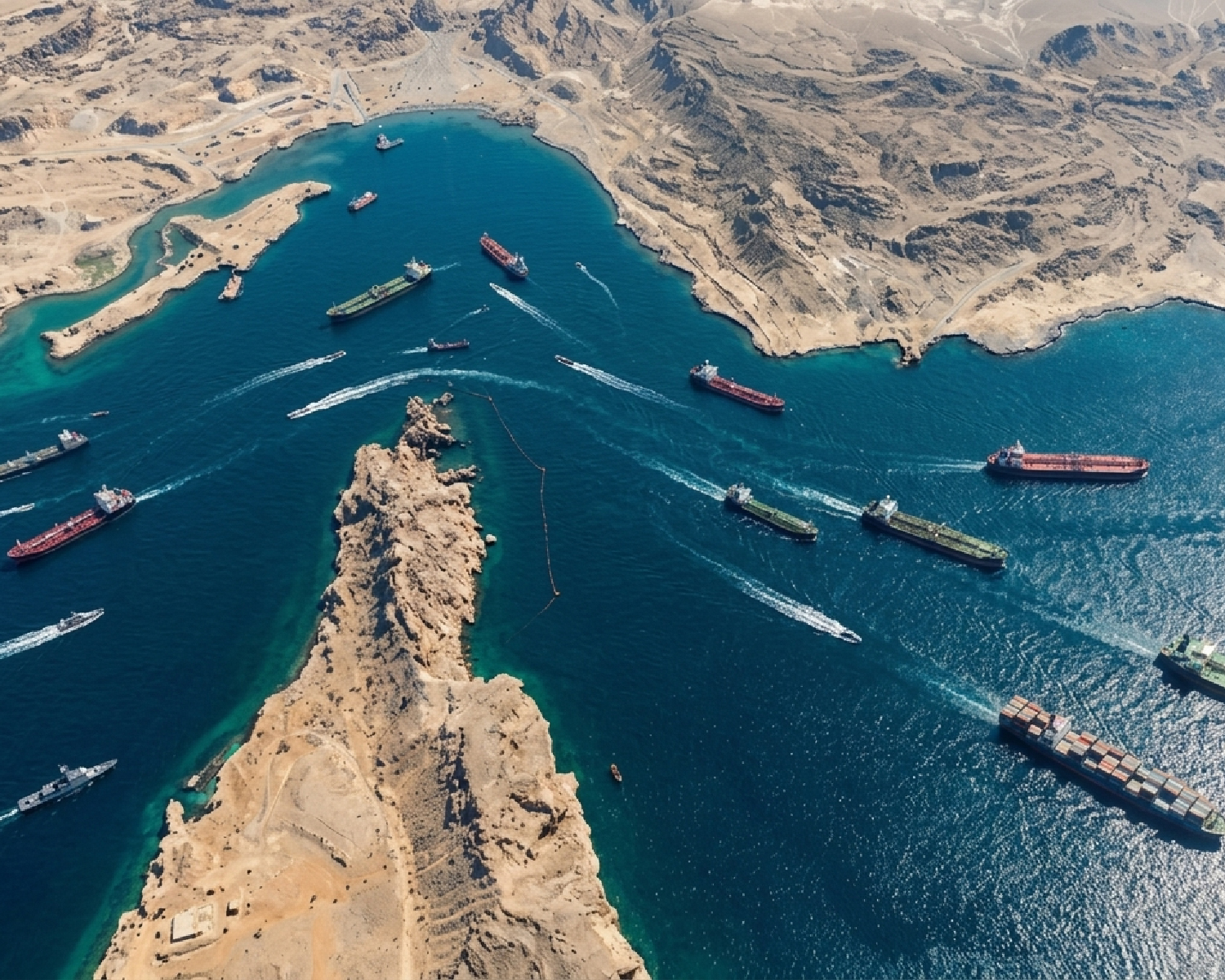
Additionally, due to its proximity to the Strait of Hormuz, the island forms part of a major global energy transit network through which oil is supplied to large parts of the world. Thus, Kharg Island should be viewed not merely as a geographic territory, but as a sensitive hub of global energy politics, regional power balance, and international economic interests.
History of Kharg Island: Ancient era, Achaemenid and Parthian periods
The earliest evidence of human activity on Kharg Island dates back to the Achaemenid period. Rock cut tombs have been discovered here that resemble Palmyrene burial styles, though some researchers associate them with Nabataean or Parthian traditions. This ancient cemetery includes Zoroastrian sites, Christian graves, and Sassanian era burials, reflecting the island’s religious and cultural diversity.
An ancient Achaemenid inscription is also present on the island, measuring 85 by 116 centimeters, considered among the earliest artifacts clearly mentioning the Persian Gulf. Unfortunately, this inscription was deliberately damaged by unknown individuals in 2008.
Christian and Islamic Periods:
Remains of a Christian monastic complex dating to after the 7th century, associated with the Eastern Church, have been found on the island. From the Abbasid to the Mongol period, evidence shows the island functioned as an active trade center. Medieval sources indicate that by the late 10th century, it was a hub for pearl fishing and Gulf trade.
Portuguese and Dutch Colonial Era:
During the European colonial period, the Portuguese were the first to occupy Kharg Island along with other Gulf islands. Later, in the 18th century, the Dutch East India Company established a trading post here, though they were eventually expelled by local rulers.
Remains of a Dutch fort built in 1747 and a Dutch garden still exist on the island today.
Twentieth Century, The Oil Era:
Kharg Island gained major strategic importance in the 1960s oil boom, when offshore oil reserves in the Persian Gulf and southern Iran were discovered. The island was transformed into a major crude oil export terminal connected by pipelines to onshore and offshore oil fields.
This infrastructure was initially established by the American oil company Amoco and later taken over by Iran after the 1979 Iranian Revolution.
By 1965, a 106-mile pipeline from the Aghajari oil field to Ganaveh had been completed, making Kharg the world’s largest oil export terminal at the time. Iranian writer Jalal Al e Ahmad, after visiting in 1960, famously called it the orphan pearl of the Persian Gulf, a name that remains associated with the island.
Iran Iraq War, The Era of Fire and Blood:
During the Iran Iraq war from 1980 to 1988, Iraqi forces repeatedly targeted Kharg Island’s oil infrastructure. By 1986, much of the terminal had been severely damaged or temporarily disabled.
Despite repeated airstrikes, Iran continued exporting oil from Kharg throughout the war. When the terminal was disrupted, Iran shifted operations to smaller facilities on Lavan and Sirri islands.
After the war, Iran invested heavily in reconstruction and expansion. The conflict made it clear that if Kharg were completely disabled, Iran’s oil revenue could collapse entirely, a realization that significantly influenced wartime strategy.
Post revolution era, the forbidden island
Today, Kharg Island is known among Iranians as the forbidden island. Under strict control of the Islamic Revolutionary Guard Corps and protected by heavy fortifications and military installations, access is restricted to individuals with official security clearance.
For decades, the IRGC has been working on redesigning offshore pipelines and reducing reliance on the island to mitigate this strategic vulnerability.
March 2026, latest situation:
In March 2026, amid escalating tensions involving Iran, US airstrikes targeted military sites on the island, including submarine mines and missile storage facilities reportedly intended for use in closing the Strait of Hormuz. However, the oil terminal itself was spared.
US President Donald Trump described it as a major military operation in Middle Eastern history and warned that if Iran continued attempts to block the Strait of Hormuz, oil facilities could also be targeted.
Thus, Kharg Island is not merely an oil terminal, it is a living mosaic of centuries of civilization, colonialism, war, revolution, and global power struggles, where layers of history coexist, from ancient Achaemenid inscriptions to modern missile stockpiles.