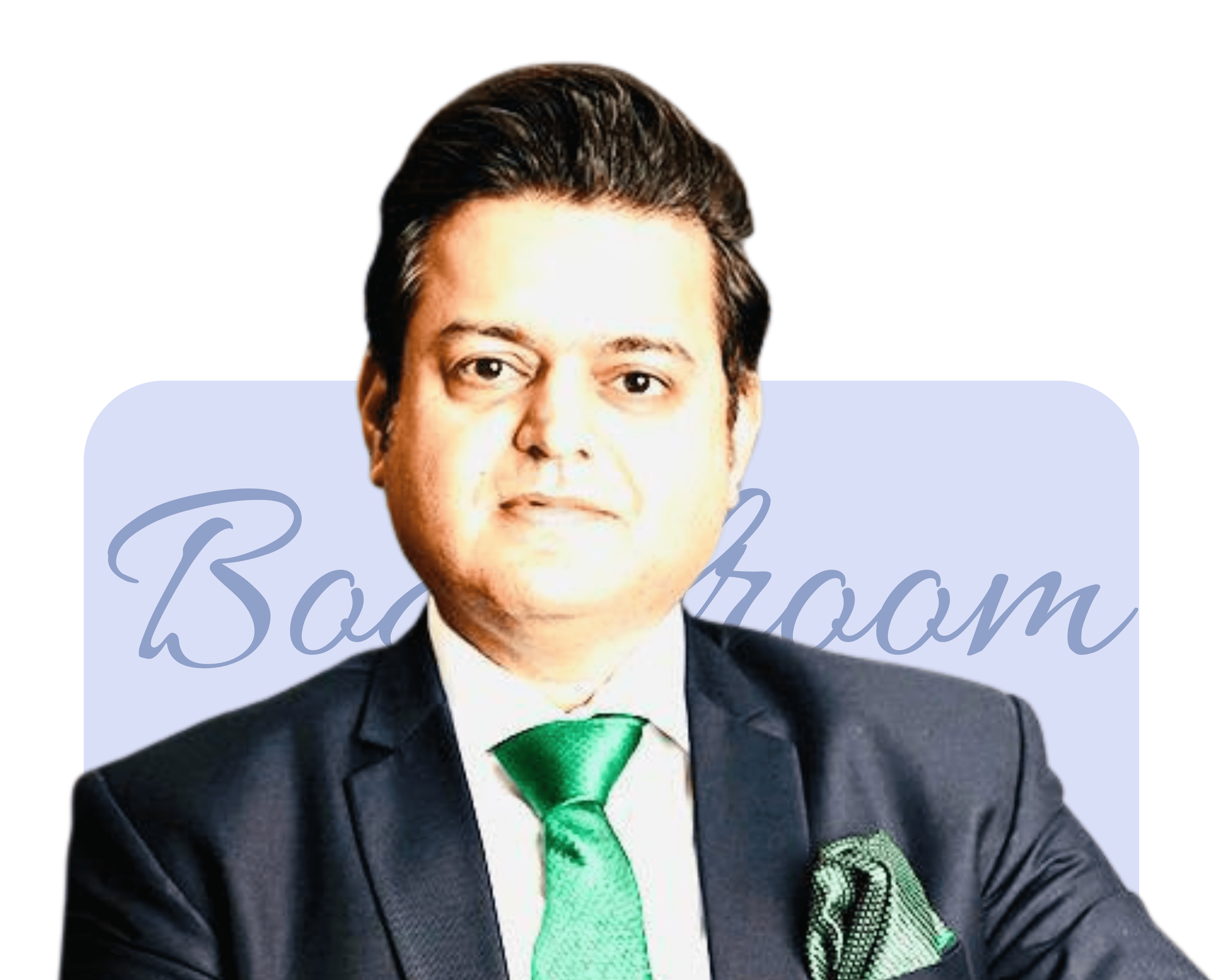

In this exclusive Boardroom interview, Ijaz Ahmed Khan, an Aura Repair Expert with over 25 years of experience, shares his insights on emotional well-being, stress management, workplace performance, and leadership effectiveness. Having worked with more than 15,000 clients across 18+ countries, he discusses energy balancing, emotional resilience, corporate stress, burnout, and personalised well-being practices. The conversation explores how organisations can integrate employee well-being into HR strategies, leadership development, and workplace culture while highlighting his vision for healthier, more balanced, and productive professional environments.
Boardroom: Please introduce yourself and share your professional journey. What inspired you to become an Aura Repair Expert and specialise in emotional well-being and stress management?
Ijaz Ahmed Khan: My name is Ijaz Ahmed Khan. I am an Aura Repair Expert, and for more than 25 years I have worked in aura repair, energy balancing and emotional well-being. In that time I have worked with more than 15,000 clients and conducted over 20,000 sessions, with people in more than 18 countries. All of my sessions are personal and remote, so a professional in London, Toronto or Lahore can sit in their own private room and work with me.
What inspired me was something I saw again and again. I witnessed people fighting invisible battles. They had chronic tiredness, sudden setbacks, a heavy feeling in their home or office, and they could not explain it. Very often only the outer symptoms were addressed, while the root cause stayed completely untouched. I wanted to work on that root.
So my journey became about one question: what is happening in a person's energy field when life feels heavy? Stress is not only a feeling in the mind. It is a pressure that affects the whole system. When we find where the energy is leaking and seal it, a person feels clearer, calmer and more in control.
Boardroom: What does Aura Repair mean in your professional practice, and what makes your approach distinctive in addressing emotional and personal challenges?
Ijaz Ahmed Khan: I explain it simply. Your aura is not a mystery cloud around you. It is a functional field of energy that carries the record of your stress, your emotional experiences and your potential. When someone lives under pressure for a long time, this field develops what I call leaks. Energy drains out, boundaries become weak, and the person starts absorbing the stress of everyone around them.
Aura Repair means finding those leaks, understanding what caused them and sealing them, so the person's energetic boundaries are strong again. It is not temporary relaxation. I see it as a structural rebuild.
What makes my approach different is three things:
- It starts with a map, not a guess. Every new client begins with an Aura Diagnostic & Mapping session, so we know exactly where the problem is before we work on it.
- It is personal. Two people can have the same stress but completely different leaks. The work follows the person, not a template.
- It goes to the root. I am not only calming the symptoms of the day. I want to know why the energy is leaking in the first place.
My mission is to shift individuals from a state of energetic depletion to absolute sovereignty, where they are in charge of their own energy again. And I always say: the moment you see the leak, the healing has already begun.
My work is not medical treatment, and it is not tied to any one religion. It works alongside medical and psychological care, never in place of it.
Boardroom: Workplace stress, burnout, and emotional exhaustion are major challenges for modern organisations. What are the key factors contributing to these issues among corporate professionals?
Ijaz Ahmed Khan: In my experience, burnout is not just being tired. It is an energy system that has been running in emergency mode for too long. I see five main factors in corporate professionals.
- Living in first gear. When pressure never stops, with targets, deadlines and messages at midnight, the body stays in fight-or-flight. The system meant for rest and recovery doesn't get its turn. The person is moving, but the engine is overheating.
- Cortisol heat. Long-term stress keeps cortisol high. I describe this as heat in the energy field. A person carrying this heat becomes short-tempered, reactive and drained, even after a weekend off.
- Weak energetic boundaries. In an open office or a stressful team, a person with weak boundaries absorbs everyone else's stress. They go home carrying a load that was never theirs.
- Emotional shocks that never healed. A harsh review, a restructuring or a conflict with a manager can leave cracks. If nobody addresses them, the energy keeps leaking from that crack for months.
- A culture of complaining and negativity. Constant complaining works like acid on a team's energy. It opens holes in everyone's energetic firewall, not just one person's.
Many people think their tiredness is only from lack of sleep. Sleep matters, but often the real problem is that their energy is leaking faster than they can refill it.
Boardroom: How does an individual's emotional well-being influence workplace productivity, decision-making, leadership effectiveness, and professional relationships?
Ijaz Ahmed Khan: I tell organisations that emotional well-being is not a soft topic. It is the operating system underneath every result they measure. If the software is corrupted, the best hardware will still crash.
- Productivity: a person whose energy is leaking spends half their effort just holding themselves together. They are present at the desk but not fully available for the work.
- Decision-making: good decisions need a stable, calm field. When someone is full of cortisol heat, they react instead of think. They choose what ends the pressure quickly, not what is right for the business.
- Leadership: leadership is felt before it is heard. When a leader walks into a room exhausted or tense, the team feels it, even if the leader says nothing. A balanced leader brings steadiness; a drained leader brings anxiety.
- Relationships: stress spreads. A person with weak boundaries either absorbs others' tension or passes their own tension on. This is where friction and office politics grow.
So when one person is balanced, the benefit doesn't stay with that person. It travels into the meeting, the team and the client relationship.
Boardroom: How can CEOs, senior executives, and business leaders manage emotional pressure while maintaining clarity, confidence, and effective decision-making?
Ijaz Ahmed Khan: High-level decision-making requires a stabilised energy field. A CEO carries the pressure of the board, the investors, the staff and the market at the same time. If they don't manage that pressure, it manages them.
With leaders I work in three stages:
- Stress-heat neutralisation. First we cool down the aggressive red heat that builds up from long hours and constant pressure. Until this heat comes down, clarity is not possible.
- The power balance. Many leaders hold their authority through tension or ego. I help them find authority that rests on stability instead. A leader who is stable doesn't need to be loud. People simply trust them.
- Presence optimisation. Then we seal the leaks that affect how the leader is perceived, so when they enter a room they are felt, not just seen.
After the session, leaders get short two-minute mental drills they can use before a board meeting or during a difficult negotiation. These help them keep their shield in place when the pressure rises.
My simple advice to any leader is this: start managing the frequency of your environment. Notice what drains you, who drains you, and when. Clarity and confidence follow a calm field.
Boardroom: What role should HR departments play in identifying employee stress and introducing structured emotional well-being initiatives within organisations?
Ijaz Ahmed Khan: HR is the first place where an organisation can notice that its people are leaking energy. HR should not wait for resignations or sick leave to tell them there is a problem. The signs come much earlier.
I would ask HR to watch for a few things:
- people who were once engaged becoming quiet or irritable
- teams where friction and complaining keep growing
- high performers who suddenly lose their spark
- people who are always tired, even after leave
The second role of HR is to make support normal. In many offices, especially in our part of the world, people hide stress because they fear it looks like weakness. HR can change that by treating emotional well-being like any other part of professional development.
Third, HR should bring the right support for the right need. Emotional well-being work like mine can sit alongside the organisation's existing support, such as occupational health, counselling and medical care. It should never replace them. When someone needs a doctor or a psychologist, HR should guide them there.
Finally, HR should start with leadership. When senior people are balanced, the culture underneath them begins to change.
Boardroom: What practical techniques or programmes do you recommend for improving employee well-being and reducing workplace stress, and how does your Aura Diagnostic & Mapping assessment identify individual needs and translate them into personalised protocols and exercises?
Ijaz Ahmed Khan: Everything starts with the Aura Diagnostic & Mapping. I call it an energetic X-ray. It is not a medical scan. It is a vibrational and energetic audit. Its purpose is to move a person from guesswork to precision.
A standard session takes about 30 minutes and is done remotely. It works like this:
- Preparation. The person sits alone in a quiet, private room and relaxes. They should be the only presence in the room, so the reading reflects only their own field.
- Chakra flow analysis. I check how freely energy is moving through the seven main energy centres.
- Vibrational frequency check. I look for heat in the aura, the signs that the person is running in first gear because of long-term stress.
- Interference audit. I look at how much of the drain comes from outside, such as negative energy or Nazar, and how much comes from inside, such as the person's own stress and thought patterns.
- Mapping report. The person receives a Vibrational Scorecard showing their chakra efficiency and dominant colours. This becomes their baseline, so we can measure progress later.
The map then tells us what repair is needed. For workplace stress, that usually means leak detection, cooling the stress heat and sealing the person's boundaries.
Between sessions I recommend simple daily practices: a few minutes of silence, visualisation, For maintenance, I suggest a session once a quarter, and an extra one during big changes such as a promotion, a restructuring or a move.
Boardroom: How can corporate organisations integrate emotional well-being sessions, stress management workshops, and professional guidance into their employee development strategies?
Ijaz Ahmed Khan: The biggest mistake is treating well-being as a one-day event. A single workshop gives people a good feeling for a week, then the old pressure returns. Well-being has to become part of how the organisation develops its people, the same way it treats training or performance reviews.
In practice, I suggest building it in layers:
- Start at the top. Leaders go first, with individual Corporate Aura Alignment sessions. When the leadership field is stable, the rest of the organisation feels it.
- Align the leadership team together. For executive teams, partners and board members, I offer Synergy Alignment, so the people steering the company are working from the same balanced energy rather than pulling against each other.
- Give everyone simple tools. Short daily practices such as silence, visualisation can be taught to wider teams and used at their desks.
- Make it regular. Quarterly maintenance works far better than an emergency session once a year.
- Connect it to existing support. It should sit alongside the organisation's occupational health, counselling and medical support, not replace them.
Every organisation is different, so I don't offer a fixed corporate package. I sit with the company personally, understand its pressures and design the engagement around them.
Boardroom: What are your most significant professional achievements, recognition, successful client transformations, and milestones? Which organisations, professionals, or communities have benefited from your expertise?
Ijaz Ahmed Khan: For me, the biggest achievement is the trust of the people I work with. Over more than 25 years I have worked with more than 15,000 clients and conducted over 20,000 sessions, across more than 18 countries.
On the institutional side, I have worked with:
- Oxford Institute of Technology: the Mindgreen Programme
- UMT (University of Management and Technology), Pakistan: a Memorandum of Understanding
- BGP Pakistan International: a corporate session
- HRLC London
- Interfaith conference London
- CARDA Islamabad
- BGP ( Pakistan international)
My work also reaches a large audience online. Around 108,000 people follow me on Instagram, around 126,000 on YouTube and around 64,500 on TikTok.
The client stories that stay with me are about real change in daily life: people overcoming social anxiety and gaining confidence, couples and families finding more balance in their relationships, and professionals learning to manage stress and anger instead of being controlled by it. My clients include executives, business owners, parents and individuals from many walks of life.
Boardroom: How has your experience working remotely with clients across 18+ countries shaped your approach to delivering emotional well-being and stress management programmes across different cultures and professional environments?
Ijaz Ahmed Khan: Working remotely with people in more than 18 countries, from the UK, USA and Canada to Australia, New Zealand, Denmark, Saudi Arabia, the UAE and Pakistan, has taught me one important lesson. Culture changes how people talk about stress, but it doesn't change how stress behaves in the energy field. A leak is a leak in London and in Lahore.
What changes is the conversation. In some cultures people say directly, "I am burnt out." In others, especially in South Asia, people describe it as heaviness, Nazar, or simply "something is not right". I have learned to listen to each person in their own language and frame of reference, and then work on the same root.
Remote work has also shown me that energy is not limited by distance. A client only needs a quiet, private room. This makes it practical for busy professionals and executives who travel, work across time zones, or cannot take half a day off for an appointment.
I also keep my work open to people of every background. It is not tied to any one religion, so a multinational team with many cultures can take part comfortably.
Boardroom: If you could introduce one transformative emotional well-being initiative across Pakistan's corporate sector, what would it be, and how would you use it to reshape workplace culture, leadership, and employee performance?
Ijaz Ahmed Khan: My vision is a reality where energetic hygiene is as foundational as physical health. So the one initiative I would bring to Pakistan's corporate sector is simple: make an energy check as normal as a medical check-up.
Today, many companies in Pakistan give their staff an annual medical check, and that is good. But nobody checks the stress a person is carrying, the leaks in their energy, or the heat building up in a leadership team. We only notice when someone burns out, leaves, or makes a costly decision under pressure.
I would build it in three steps:
- Leaders first. Every senior leader gets their own map, so they understand their own stress patterns and learn to manage them.
- A regular rhythm for teams. Short daily practices and regular well-being sessions become part of the working calendar, not an emergency response.
- Breaking the silence. In our culture, people still hide stress because they fear it looks weak. When leaders speak openly about managing their own energy, everyone else gets permission to do the same.
The result I want to see is workplaces where leaders make decisions from calm instead of pressure, teams spend less energy on friction and politics, and people go home with energy left for their families. When the people are balanced, the performance follows.