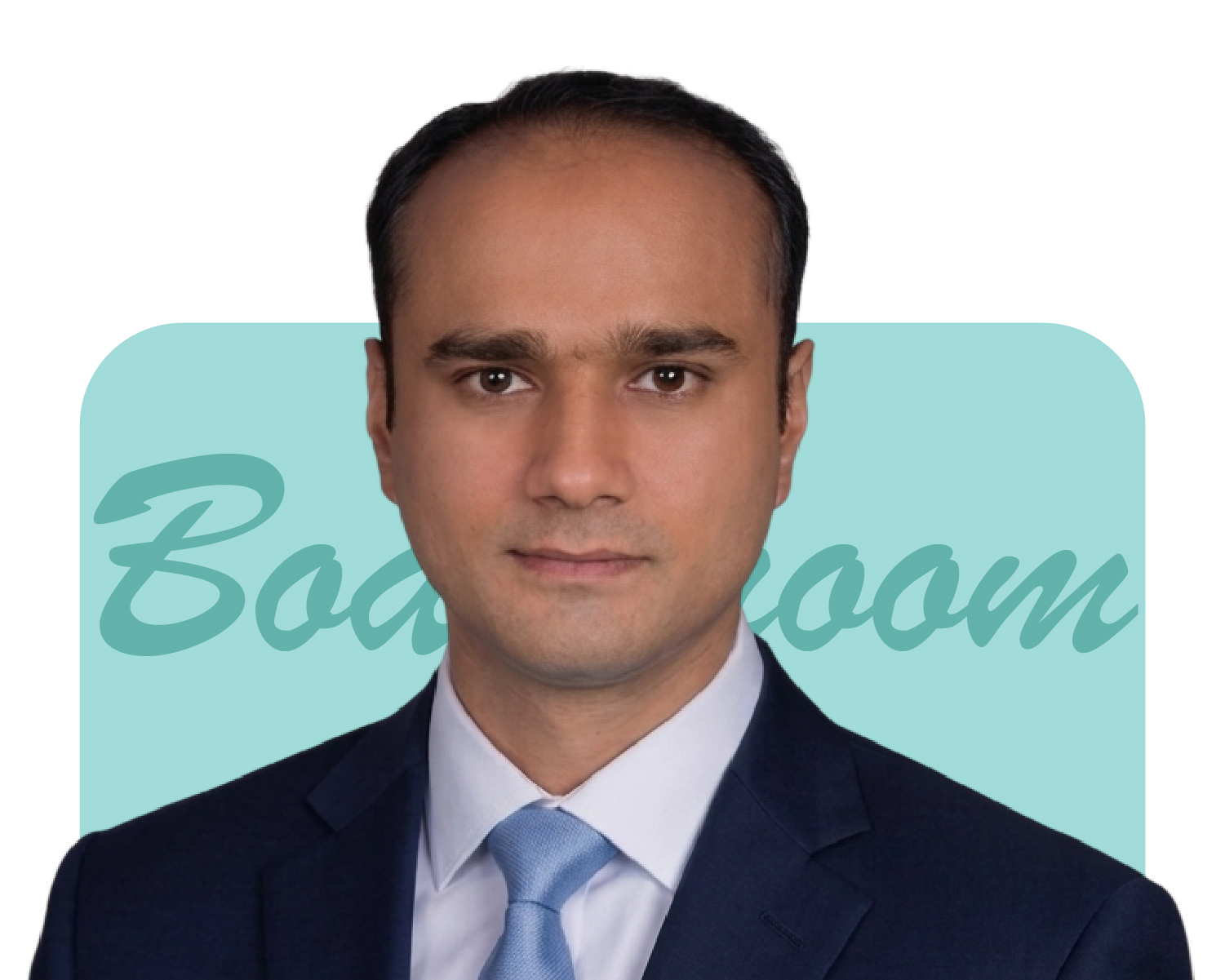

In an era where software development is rapidly evolving from simple digitization to intelligent automation, businesses require technology partners who understand strategy as deeply as they understand code. In this exclusive conversation with Boardroom, Ateeq Asif, founder of Zapta Technologies, shares how his company is building AI-driven business systems with a disciplined focus on scalability, process optimization, and measurable value creation. From redefining MVP strategy to embedding AI with purpose rather than hype, he offers candid insights into what separates sustainable technology companies from short-term service providers in today’s competitive digital economy.
Boardroom: What is the foundational thinking behind your company and its approach to business solutions?
Ateeq Asif: Our foundation is rooted in strong business analysis and process optimization. From the beginning, we have worked closely with founders and executive teams to understand real business pain points. Instead of simply digitizing processes, we focus on making them intelligent. With the emergence of AI, we made a strategic shift to embed AI at the core of our systems so that businesses can benefit from automation that is adaptive, scalable, and value driven rather than static and manual.
Boardroom: How do you incorporate AI into your solutions in a meaningful way?
Ateeq Asif: We approach AI as an engine rather than an add on. Traditional systems operate on fixed parameters, but AI introduces flexibility and dynamic decision making. It enables systems to adapt to multiple variables and deliver more optimized outcomes. However, we are disciplined in its use. We only recommend AI where it directly contributes to business objectives and enhances measurable value, avoiding unnecessary or superficial implementation.
Boardroom: How has your business evolved from a startup to a more structured organization?
Ateeq Asif: In the early stages, like most startups, we accepted a wide range of projects to establish ourselves. Over time, as we grew in team size and maturity, we realized the importance of specialization. By mid-2025, we refined our strategy and defined clear verticals including healthcare, logistics, hospitality, compliance, and sports technology. This shift allowed us to move from being a general service provider to a focused and domain driven organization.
Boardroom: How do you ensure scalability from the early stages of a company?
Ateeq Asif: Scalability comes from being process oriented rather than people dependent. From day one, we defined roles, responsibilities, and professional boundaries. We treated ourselves as structured professionals rather than informal collaborators. By standardizing processes early and continuously refining them, we created a system that can scale regardless of team size or complexity.
Boardroom: What misconceptions do founders have when approaching product development, particularly MVPs?
Ateeq Asif: One of the most common misconceptions is that an MVP is a fully developed product. In reality, an MVP is a focused proof of concept that validates a business idea with minimal resources. Many founders, especially outside mature markets, try to include every feature in the MVP, which defeats its purpose. The key is to prioritize essential functionality and avoid unnecessary complexity in the early stages.
Boardroom: How do you manage delivery across multiple industries with different requirements?
Ateeq Asif: While implementation frameworks remain consistent, two factors require deep attention. The first is business understanding and requirement gathering, where our business analysts conduct detailed research and competitive analysis. The second is compliance. Each industry, particularly sectors like healthcare and finance, has strict requirements around data security and operations. We address this by combining domain expertise with strong technical governance.
Boardroom: How do you differentiate between meaningful AI integration and unnecessary feature additions?
Ateeq Asif: Our approach is objective driven. We start by defining the core goal of the system and then evaluate whether a feature contributes to that goal. If AI enhances the outcome, we implement it. If it is merely cosmetic or does not add measurable value, we avoid it. This ensures that clients invest in functionality that improves ROI rather than adding complexity without purpose.
Boardroom: How do you manage risks across planning, execution, and maintenance phases of software development?
Ateeq Asif: Risk management begins at the planning stage through detailed analysis and what we call sprint zero. This phase helps identify potential challenges, resource gaps, and technical complexities. During execution, strong processes ensure consistency and control. In the maintenance phase, risks shift toward user behavior and customer expectations, which require structured support systems and ongoing engagement strategies to manage effectively.
Boardroom: What key success patterns have you identified from your projects?
Ateeq Asif: Two elements stand out. The first is strong processes and disciplined execution. The second, and equally important, is customer engagement. Even the most technically sound project can face challenges if communication and collaboration with the client are weak. We have institutionalized customer engagement as a dedicated function to ensure long term success and relationship stability.
Boardroom: How do you see your company evolving in the coming years, especially with rapid AI advancements?
Ateeq Asif: The rapid evolution of AI has reshaped our perspective. Instead of long-term static planning, we now operate with shorter strategic cycles and continuously adapt to technological changes. We are actively transforming AI from a potential disruption into an opportunity by integrating it into workflows and upskilling our teams. The focus is on adaptability, speed, and continuous learning to remain competitive in an evolving landscape.