
In Pakistan’s startup ecosystem, the gap between ideas and execution remains one of the most persistent bottlenecks. While founders are increasingly aware of the importance of digital presence and technology, many struggle to find partners who can translate vision into tangible outcomes without compromising on cost or quality.
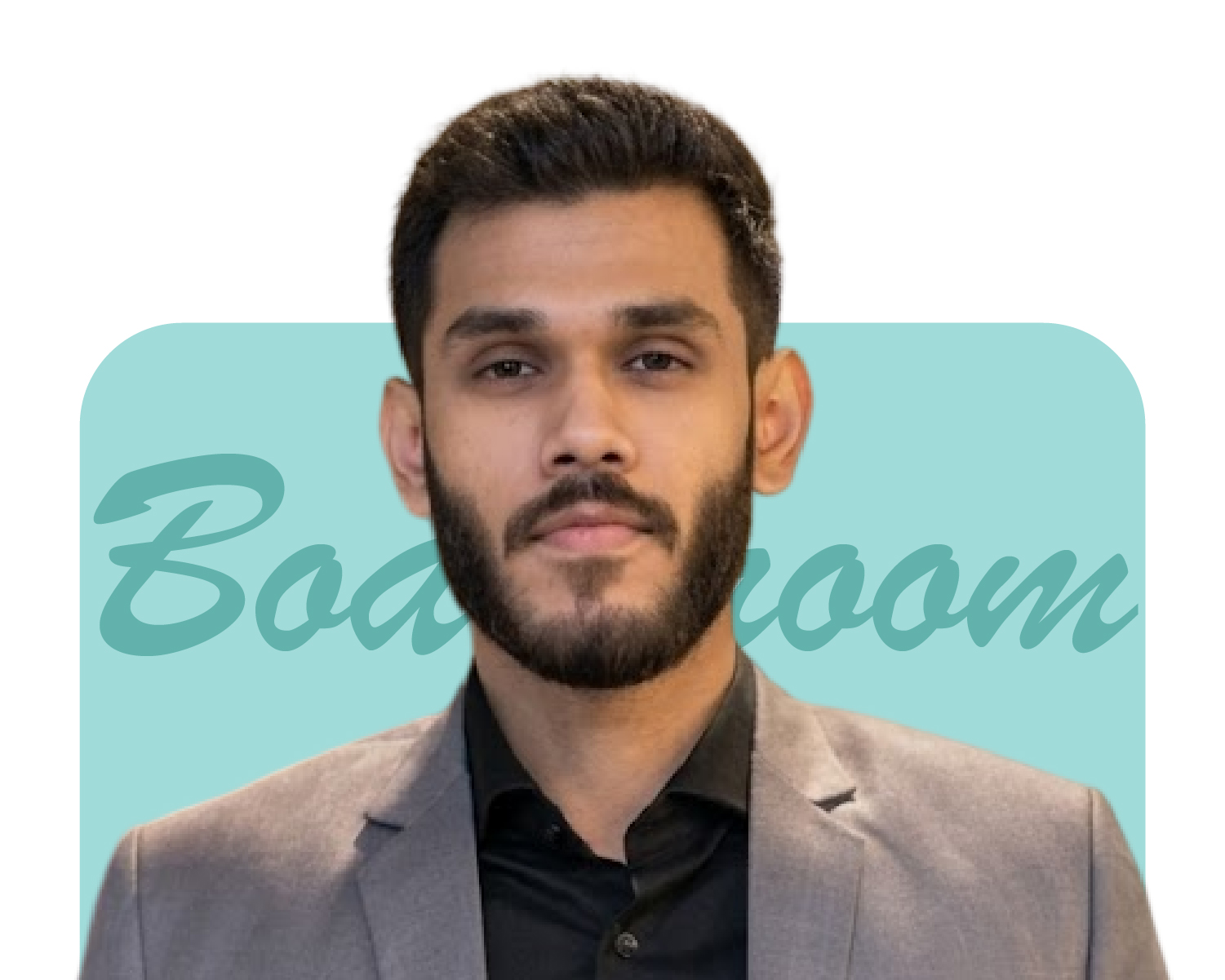
Axtra Studios, led by Zafar Ahmed, is positioning itself precisely within this gap. Rather than operating as a conventional software house or marketing agency, the company frames itself as an execution partner, focusing on solving core business problems rather than selling predefined services. Its approach is rooted in structured thinking, cross-functional delivery, and an emphasis on outcomes over outputs.
In this conversation, Zafar Ahmed shares insights into the realities of startup execution, the limitations of traditional hiring metrics, and the evolving dynamics between services and product-driven models. He also outlines how Axtra Studios is navigating this shift, including its move toward building scalable digital products such as Quickgrid.ai.
Boardroom: What core problem are you trying to solve in the market?
Zafar Ahmed: We identified a fundamental gap in the market where small businesses and early-stage founders are underserved. On one end, large agencies offer comprehensive solutions but are often prohibitively expensive. On the other end, freelancers are affordable but they only cover one part of the process, delivering only fragmented services. What founders truly need is an execution partner who can take ownership of their idea from concept to deployment. This gap between affordability and full-scale execution is where we position ourselves.
Boardroom: Who is your primary target audience?
Zafar Ahmed: Our primary audience consists of small businesses, startups, and individual founders who have validated ideas but lack the internal capacity to execute them. These are ambitious individuals who understand the importance of technology and digital presence but struggle to find reliable, cost-effective partners who can translate vision into reality.
Boardroom: How do you define your offering: a software house, marketing agency, or something else?
Zafar Ahmed: We deliberately avoid limiting ourselves to traditional labels like software house or marketing agency. These labels often restrict thinking and create silos. Instead, we operate as a business problem-solving partner. Whether the solution involves software development, digital marketing, SEO, or AI integration, our focus is always on solving the core business challenge rather than selling a predefined service.
Boardroom: How do you approach client problems differently?
Zafar Ahmed: Our approach begins with diagnosing the real problem. Often, clients come with a predefined solution in mind such as “I need a website” or “I need an app.” However, these are not problems; they are assumptions about solutions. We dig deeper to understand what they are trying to achieve. Is it revenue growth, customer acquisition, operational efficiency, or brand positioning? Once the actual problem is identified, we design a solution that may combine multiple disciplines. This structured thinking allows us to deliver outcomes rather than just outputs.
Boardroom: What are the biggest challenges for startups in execution?
Zafar Ahmed: The biggest challenge is inertia. Many founders spend too much time planning and too little time executing. There is a constant pursuit of perfection, which delays progress. In reality, startups need speed, iteration, and adaptability. Execution is messy, and that is acceptable. The key is to start early, test quickly, and learn continuously. Momentum is far more valuable than perfection in the early stages.
Boardroom: What is your perspective on hiring and the role of CGPA?
Zafar Ahmed: CGPA is significantly overemphasized, particularly in large organizations where it is used as a filtering mechanism due to the sheer volume of applications. However, it does not accurately reflect a candidate’s ability to solve real-world problems. We place far greater importance on practical experience, project work, and the ability to think critically. A candidate with hands-on experience and a portfolio of work often outperforms someone with a high CGPA but limited practical exposure.
Boardroom: What advice would you give to university students preparing for the job market?
Zafar Ahmed: Students should start building real-world projects as early as possible. By their sixth or seventh semester, they have sufficient technical knowledge to begin working on meaningful applications. Freelancing, internships, or even self-initiated projects can significantly enhance their learning curve. The goal should be to graduate not just with a degree, but with a portfolio that demonstrates capability and initiative.
Boardroom: How do you define accountability within your team?
Zafar Ahmed: Accountability is about ownership and clarity. Each project has a designated lead who is responsible for timelines, deliverables, and overall execution. We establish clear milestones and maintain regular communication, but we avoid excessive micromanagement. Instead, we empower team members to take responsibility for their work. This creates a culture of trust and performance, where individuals are driven by outcomes rather than supervision.
Boardroom: What differences do you observe between local and international clients?
Zafar Ahmed: There is a noticeable difference in terms of structure and expectations. International clients typically define scope clearly, communicate requirements effectively, and trust professional judgment. They are also more aligned with value-based pricing. Local clients, in contrast, often have evolving requirements, less clarity in scope, and budget constraints. This can lead to frequent revisions and misaligned expectations. However, working with local clients is still important, especially in the early stages, as it helps build experience and credibility.
Boardroom: What has been one of your most challenging projects?
Zafar Ahmed: One of our most challenging projects involved taking over a partially completed product from another team. The client had high expectations but limited flexibility in terms of budget and timelines. We had to rebuild significant portions of the product while managing client expectations and operational costs. Initially, the project resulted in financial loss. However, it provided valuable lessons in project selection, risk assessment, and client management. It reinforced the importance of clearly defined scope and the ability to say no when a project does not align with long-term objectives.
Boardroom: How do you see the future of services versus products?
Zafar Ahmed: We believe the industry is undergoing a fundamental shift. This is arguably the most challenging time to build a purely services-based company and the most promising time to build products. With the rise of AI and automation, many services are becoming commoditized. The future lies in productizing services and focusing on measurable outcomes rather than deliverables. Businesses that can translate their expertise into scalable products will have a significant competitive advantage.
Boardroom: Are you currently working on any product initiatives?
Zafar Ahmed: Yes, we are actively developing a product called Quickgrid.ai. It is designed specifically for content creators, particularly those managing Instagram pages. The platform enables users to create visually consistent and aesthetically appealing grid layouts using pre-designed templates. This eliminates the need for dedicated designers and simplifies content planning. The product is currently in its final stages of development and reflects our strategic shift from a service-oriented model to a product-driven approach.