
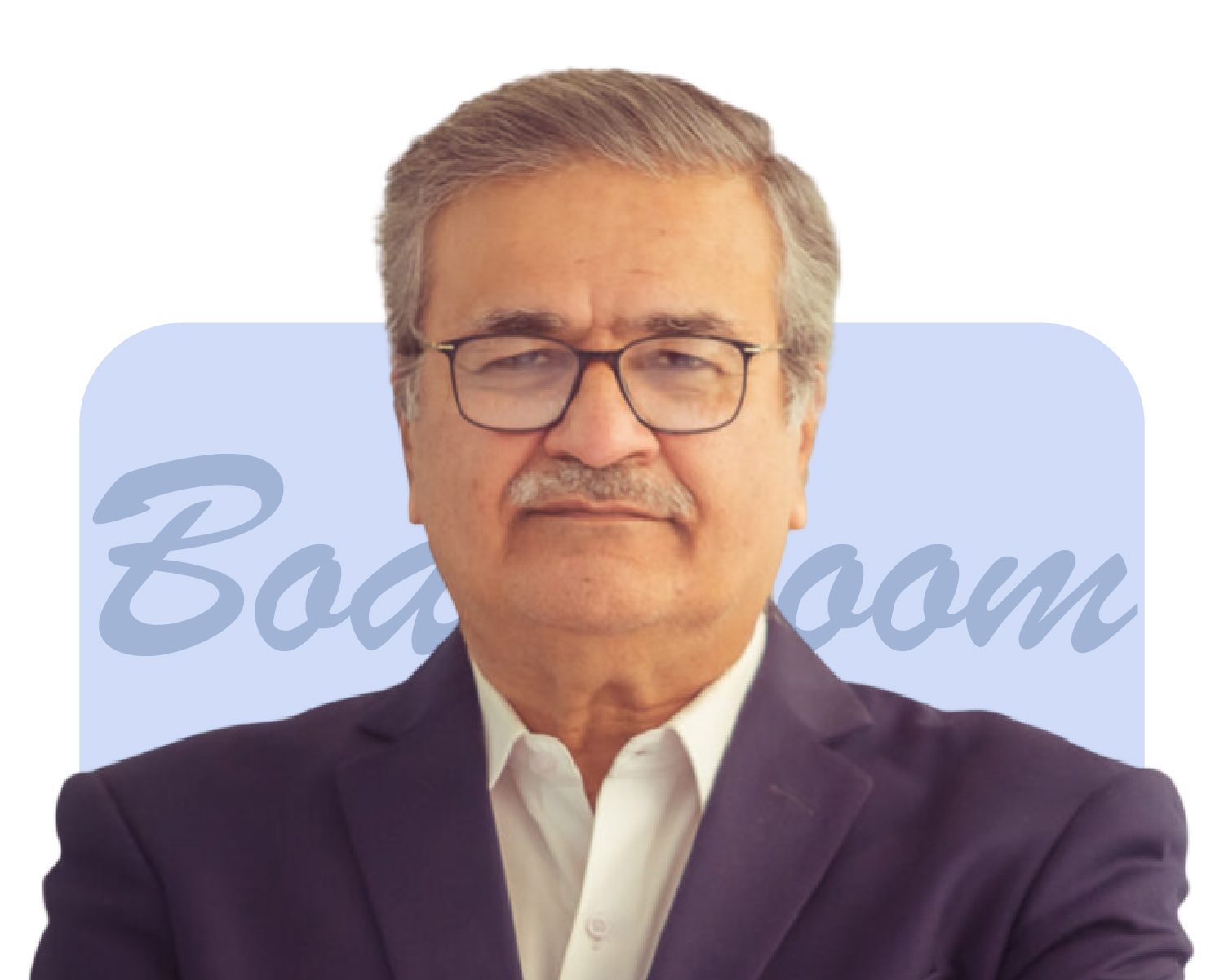
With a career spanning over 28 years, Shahzad Akhter, Managing Director of Strateasy Consulting, is recognized for transforming vision into execution and coaching leaders to drive sustainable growth. His journey began in corporate leadership roles, but a bold decision to pursue entrepreneurship led him to partner with organizations across manufacturing, retail, and entertainment. Known for his adaptive and people-centric leadership style, he blends execution discipline with empathy, helping leaders navigate change with clarity and trust. Passionate about governance, ethics, and accountability, Shahzad’s mission is to shape resilient organizations and inspire leaders to create impact with courage and integrity.
Boardroom: Kindly share your professional journey and what inspired you to pursue this profession?
Shahzad Akhter: My career spans over 28 years across leadership, sales, and organizational transformation. Early on, I realized many businesses struggle not because of lack of ideas, but because strategies rarely translate into execution. That insight shaped my path. Today, as Managing Director of Strateasy Consulting and a coach to corporate leaders, I focus on bridging the gap between vision and results, helping leaders and organizations grow sustainably.
Boardroom: How would you describe your leadership style, and how has it evolved over the years?
Shahzad Akhter: I would describe my style as adaptive and people-centric. In my early years, I was highly task-driven. Over time, I learned that lasting success requires empowering people with clarity and trust. My leadership today blends execution discipline with empathy and collaboration, whether guiding teams or coaching senior executives to lead more effectively.
Boardroom: What has been the most difficult decision you have made in your professional life, and what did you learn from it?
Shahzad Akhter: Leaving a secure senior corporate role to build Strateasy Consulting was my most difficult decision. It meant stepping into uncertainty with only conviction as fuel. The lesson was clear: bold choices guided by purpose create freedom and impact. That decision allowed me to work across industries including manufacturing, retail, and entertainment, and to coach leaders navigating transformation.
Boardroom: Every leader faces setbacks. Can you share an example of how you navigated a major challenge and built resilience from it?
Shahzad Akhter: During a transformation in the manufacturing sector, we faced deep resistance to cultural change. Leadership was locked in firefighting, and employees were siloed. By engaging stakeholders, coaching key leaders, and introducing Balanced Scorecard and cultural KPIs, we shifted resistance into ownership. That taught me resilience is less about endurance and more about adaptability, and about enabling leaders to unlock change in others.
Boardroom: In your view, what role do governance, ethics, and accountability play in building sustainable organizations?
Shahzad Akhter: They are the bedrock of sustainability. Governance provides structure, ethics builds trust, and accountability enables scale. As a coach, I stress to leaders that these are not compliance checkboxes but strategic enablers. Organizations that embed them consistently outperform and endure.
Boardroom: How do you balance tradition with innovation, especially in an environment where disruption is constant?
Shahzad Akhter: Tradition gives roots and innovation gives wings. The balance is respecting values and relationships while reimagining how we serve customers. For example, with Lucky Irani Circus, we preserved cultural heritage while modernizing formats and sponsorship models. Leaders I coach learn to strike this same balance, respecting legacy while leading disruption.
Boardroom: What strategies do you use to motivate and empower your teams to perform at their best?
Shahzad Akhter: I focus on three fundamentals: clarity by connecting roles to strategy, trust by giving ownership and recognition, and growth by investing in learning and not just performance. As a coach, I encourage leaders to model these behaviors. When people feel trusted, valued, and developed, they deliver far beyond expectations.
Boardroom: Who have been your mentors or role models, and what lessons have you carried from them into your own leadership?
Shahzad Akhter: I have learned from mentors who emphasized two truths: execution discipline separates visionaries from achievers, and integrity is the non-negotiable currency of leadership. I carry these into my own practice, guiding organizations on execution while coaching leaders to lead with integrity.
Boardroom: What do you see as the biggest opportunities and challenges for Pakistan’s business ecosystem in the coming years?
Shahzad Akhter: Pakistan’s opportunity lies in its young talent and strategic location. With the right governance, skills, and innovation, the country can become a hub for regional growth. The challenges are resistance to change, weak governance structures, and underinvestment in people. Coaching leaders to embrace change and invest in human capital will be critical for seizing these opportunities.
Boardroom: What advice would you give to young professionals and entrepreneurs who aspire to leadership roles?
Shahzad Akhter: Three principles guide my advice: master execution because ideas are common and results are rare, hold values above shortcuts because integrity compounds over time, and keep learning with humility because leadership is a lifelong journey.
Boardroom: How do you maintain a balance between professional responsibilities and personal well-being?
Shahzad Akhter: Discipline and boundaries are key. I plan intentionally, delegate effectively, and prioritize family and health alongside work. I also recharge through learning and coaching, as guiding others gives me energy and perspective.
Boardroom: Looking back, what impact do you hope to leave behind on your industry, organization, or community?
Shahzad Akhter: I hope to be remembered as someone who helped organizations move from vision to value, and as a coach who shaped leaders to lead with courage and integrity. If my work leaves behind stronger institutions and more responsible leaders, that will be the legacy I value most.


