A forest does not grow as a single organism but as an interconnected system where each element reinforces the other. The same principle increasingly defines how enduring business groups evolve. Rather than remaining confined to a single enterprise, successful business families and institutions expand into diversified yet interdependent ecosystems that strengthen resilience, unlock synergies, and sustain long term growth.
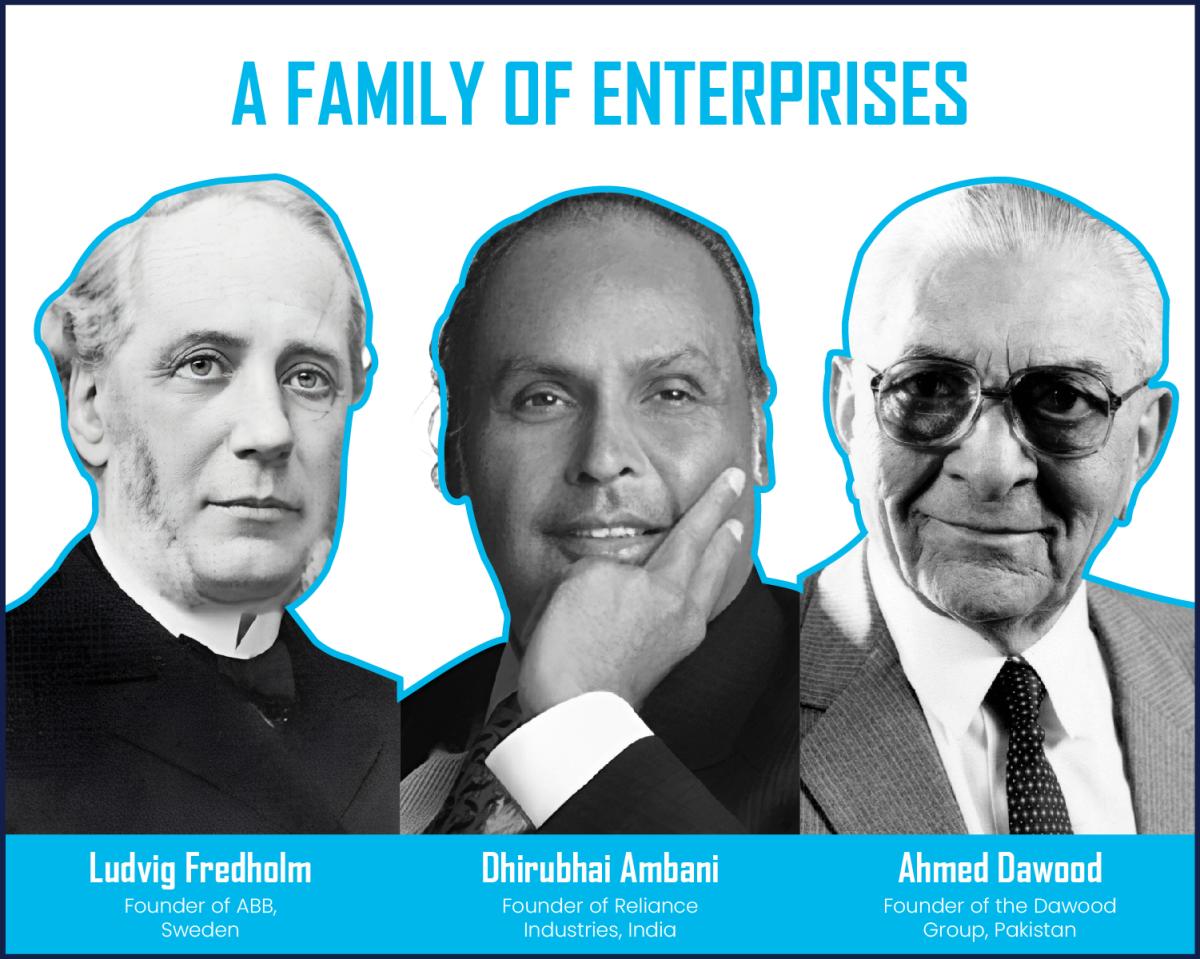
In Pakistan, the Dawood Group founded by Mr. Ahmed Dawood offers a compelling illustration of this evolution. What began as a trading enterprise has expanded into sectors such as energy, fertilizers, petrochemicals, and education. Each vertical operates with a degree of autonomy, yet collectively they reinforce the group’s strategic positioning. The presence of institutions like Engro within this network demonstrates how family-led origins can transition into professionally managed entities while still benefiting from shared vision and capital discipline.
A similar but larger scale transformation is visible in India through the Reliance Industries founded by Dhirubhai Ambani. Originating in textiles, Reliance has built an expansive ecosystem spanning petrochemicals, telecommunications, retail, and digital services. Its structure reflects a deliberate strategy of creating interconnected platforms rather than isolated businesses. For example, its telecom and retail arms feed into its digital ecosystem, creating data driven advantages and cross sector leverage. This model exemplifies how scale, when integrated thoughtfully, compounds value rather than diluting focus.
In a different context, the Swiss based ABB founded by Ludvig Fredholm represents an institutional rather than family driven ecosystem. Formed through the merger of Asea and Brown Boveri, ABB operates across electrification, automation, and robotics. Its strength lies in collaborative integration across divisions, enabling technological innovation and operational efficiency. Unlike traditional conglomerates, ABB’s ecosystem is driven by knowledge sharing and engineering excellence rather than ownership lineage.
Across these examples, a consistent pattern emerges. The strongest business groups do not expand randomly. They grow by building complementary capabilities, aligning governance structures, and fostering collaboration across entities. This ecosystem approach reduces risk concentration, enhances adaptability, and creates multiple avenues for value creation. Ultimately, the analogy of a forest is instructive. Individual companies may rise and fall, but a well-structured ecosystem endures. For business families and institutions alike, the future belongs not to isolated enterprises but to networks that are strategically connected, operationally independent, and collectively resilient.