Succession in family enterprises is less about replacement and more about continuity. Each generation adds its own experience ideas and leadership style but the enterprise remains guided by a deeper philosophy established by the founders. When succession is handled thoughtfully the business evolves while preserving its identity. When it is mishandled, the river loses direction and the institution begins to fragment.
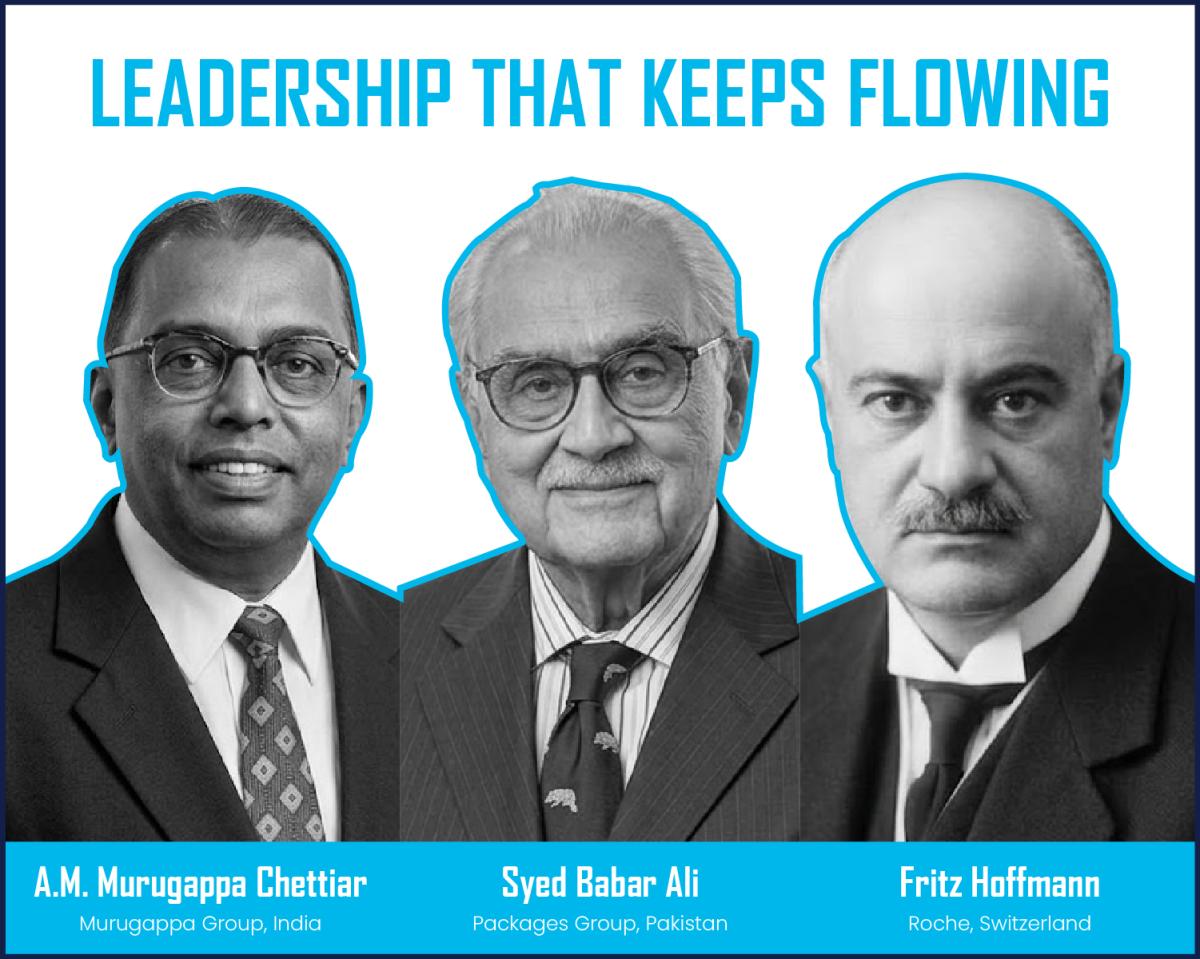
In Pakistan a strong example of this continuity can be seen in the evolution of the Packages Group led by the family of Syed Babar Ali. The company began as a packaging enterprise during a period when Pakistan was still developing its industrial base. Over the decades it expanded into multiple sectors including paperboard consumer goods and financial services. While the leadership evolved across generations the guiding principles of professionalism institutional development and national economic contribution remained central to the group’s identity.
Syed Babar Ali is widely respected not only as an industrialist but also as a nation builder who believed that businesses must contribute to the intellectual and social development of society. His role in the establishment of the Lahore University of Management Sciences reflected this broader vision of institutional responsibility. As leadership responsibilities gradually transitioned to the next generation the core philosophy of building strong institutions rather than pursuing short term gains continued to shape the direction of the group. The river changed its flow of leadership yet the current of values remained intact.
A similar pattern of generational continuity can be observed in India through the Murugappa Group founded by A.M. Murugappa Chettiar which began as a trading house in the early twentieth century. Over nearly a century the group evolved into one of India’s most respected family business conglomerates with interests in engineering, agriculture, financial services, and manufacturing. What distinguishes the Murugappa Group is its structured approach to family governance and succession. Leadership responsibilities rotate among qualified family members while professional managers play significant operational roles. This system ensures that each generation contributes fresh leadership while the institutional philosophy remains stable.
The Murugappa experience highlights a key lesson in family business succession. The transition of authority should not disrupt the institutional framework. Instead, governance structures should guide leadership changes so that the organization continues to operate with clarity and discipline. Much like a river that is guided by its banks family businesses require clear boundaries in the form of governance policies family councils and professional management systems.
Switzerland provides another remarkable example through the pharmaceutical company Roche. Founded by Fritz Hoffmann, in the nineteenth century the company remains strongly influenced by the Hoffmann and Oeri families who continue to hold a controlling stake. Over the decades Roche transformed itself from a regional pharmaceutical firm into one of the most innovative healthcare companies in the world. Leadership has evolved through professional executives and family oversight but the long-term commitment to scientific innovation and global healthcare impact has remained constant.
What makes Roche particularly instructive is the balance between family stewardship and professional management. The families maintain strategic influence through ownership and board participation while day to day operations are handled by highly experienced executives. This arrangement preserves long term vision while allowing the company to operate with global professionalism. In effect the family acts as the guardian of the river’s direction while professional leaders guide the daily flow.
These international and regional examples illustrate a powerful truth about family enterprises. Leadership succession does not have to weaken institutions. When values governance and long-term purpose are clearly defined each generation becomes a custodian rather than a disruptor. The enterprise gains the ability to renew itself continuously while remaining anchored in its founding philosophy.
For many family businesses in South Asia the greatest challenge is not the lack of opportunity but the difficulty of managing generational transition. Conflicts over authority, strategy, or ownership can cause businesses to fragment just when they should be expanding. The river metaphor offers a useful perspective. The water must change for the river to remain alive but the direction must remain steady.
When succession is approached as a process of stewardship rather than inheritance family businesses gain a unique advantage. They combine the patience of long-term ownership with the adaptability of evolving leadership. Like a river flowing through changing landscapes the enterprise moves forward generation after generation carrying with it the accumulated wisdom values and aspirations of the family that guides its course.